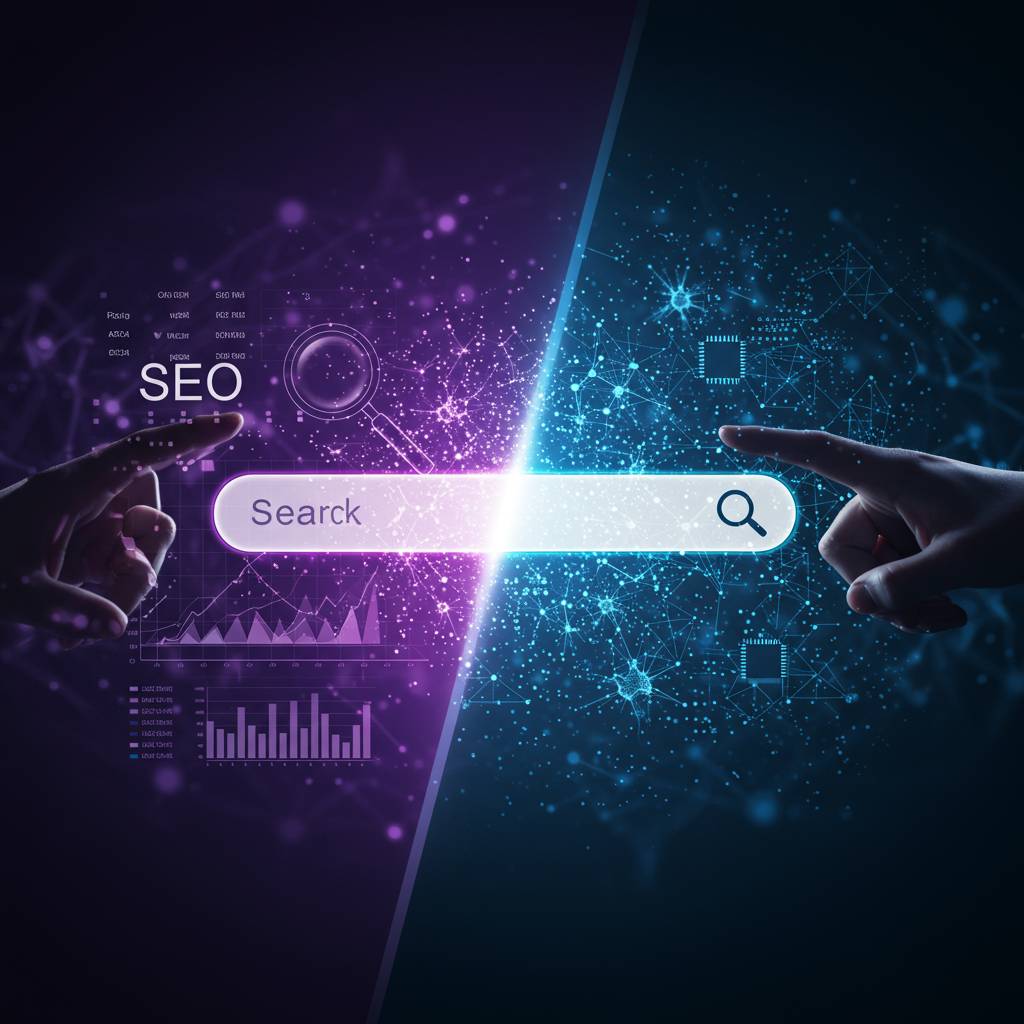
# SEO vs. AI: Who Will Win the Future of Search?
Are you concerned about the future of your digital marketing strategy in this rapidly evolving technological landscape? The battle between traditional SEO techniques and emerging AI technologies has become one of the most significant talking points among digital marketers, business owners, and technology enthusiasts worldwide.
As search engines continuously refine their algorithms and AI capabilities advance at an unprecedented pace, professionals across industries are asking the critical question: Will AI ultimately replace SEO, or will these technologies find a way to coexist and complement each other?
In this comprehensive analysis, we’ll examine the shifting dynamics between search engine optimization and artificial intelligence, providing valuable insights based on current data and expert predictions. Whether you’re a seasoned SEO professional concerned about job security, a business owner allocating marketing resources, or simply interested in the future of digital discovery, this article offers essential perspectives on how the search landscape is transforming in 2024 and beyond.
From the evolution of traditional SEO strategies to surprising AI innovations that are reshaping search rankings, we’ll explore what these changes mean for your digital presence and how you can prepare for the search ecosystem of tomorrow. The answers might surprise you – and could fundamentally change how you approach your digital marketing strategy.
Join us as we delve into this fascinating technological intersection and uncover what it means for the future of finding information online.
1. The Evolution of Search: How AI is Reshaping Traditional SEO Strategies in 2024
# SEO vs. AI: Who Will Win the Future of Search?
## 1. The Evolution of Search: How AI is Reshaping Traditional SEO Strategies
The search landscape is undergoing a fundamental transformation as artificial intelligence technologies become increasingly sophisticated. Traditional SEO strategies that once dominated digital marketing playbooks are being challenged by AI-powered search algorithms that understand user intent in ways previously unimaginable.
Google’s introduction of advanced machine learning systems like RankBrain and BERT has already significantly altered how content is evaluated. These AI systems analyze contextual relationships between words rather than simply matching keywords, forcing marketers to rethink their approach to content creation and optimization.
The most dramatic shift came with the integration of large language models into search experiences. Microsoft’s partnership with OpenAI brought ChatGPT capabilities to Bing, while Google countered with its own AI Search Generative Experience (SGE). These AI systems can now generate comprehensive answers directly in search results, potentially eliminating the need for users to click through to websites at all.
For digital marketers, this evolution demands adaptation. Content must now satisfy both traditional ranking factors and AI evaluation metrics, which prioritize expertise, authoritativeness, and trustworthiness. Companies like Semrush and Ahrefs have responded by developing AI-integrated SEO tools that help marketers navigate this new terrain.
The most successful SEO practitioners today recognize that AI isn’t replacing traditional SEO but rather elevating its importance. Websites must now deliver exceptional user experiences with content that demonstrates genuine expertise while still maintaining technical excellence. This balanced approach ensures visibility both in traditional search results and in AI-generated responses.
As search evolves, the fusion of SEO expertise with AI understanding represents not a battle between competing forces, but rather a new paradigm where human insight and machine intelligence combine to create more valuable search experiences for users across the digital landscape.
2. 5 Surprising Ways AI is Transforming Search Rankings (and What SEO Experts Need to Know)
# タイトル: SEO vs. AI: Who Will Win the Future of Search?
## 見出し: 5 Surprising Ways AI is Transforming Search Rankings (and What SEO Experts Need to Know)
The landscape of search engine optimization is undergoing a seismic shift as artificial intelligence increasingly influences how content is ranked and discovered. While traditional SEO tactics remain important, AI algorithms are rapidly evolving, creating both challenges and opportunities for digital marketers. For those navigating this changing terrain, understanding these transformations is no longer optional—it’s essential for survival.
First, AI-powered intent analysis has moved beyond simple keyword matching. Search engines now interpret user intent with remarkable precision, prioritizing content that genuinely answers the searcher’s questions. This shift means SEO professionals must focus less on keyword density and more on comprehensive topic coverage that addresses multiple aspects of user queries.
Second, content quality assessment has become increasingly sophisticated. AI can now evaluate factors such as expertise, authoritativeness, and trustworthiness with greater nuance. Google’s helpful content system exemplifies this trend, rewarding content created primarily for humans rather than search engines. The days of “gaming” the algorithm with superficial optimization are effectively over.
Third, user experience signals have gained unprecedented importance. AI systems track engagement metrics like dwell time, click-through rates, and interaction patterns to determine whether users find content valuable. This means technical SEO elements like page speed, mobile responsiveness, and intuitive navigation have direct ranking implications.
Fourth, AI is personalizing search results more than ever before. The same query can yield dramatically different results based on a user’s location, search history, and device type. SEO experts must now optimize for multiple audience segments rather than aiming for a single “top position” that may not exist uniformly across all users.
Finally, AI-generated content is creating new competitive dynamics. As tools like ChatGPT produce increasingly sophisticated text, the volume of online content is exploding. Standing out requires moving beyond formulaic approaches to create truly distinctive, valuable material that AI cannot easily replicate.
For SEO professionals, adapting to these AI-driven changes means developing new skillsets. Data analysis, user experience design, and content strategy have become essential complements to traditional optimization techniques. The most successful practitioners will be those who embrace AI as a partner rather than viewing it as a threat, using machine learning insights to inform more effective human-centered strategies.
3. Beyond Keywords: The New Battle Between Human-Crafted SEO and Machine Learning Algorithms
# タイトル: SEO vs. AI: Who Will Win the Future of Search?
## 見出し: 3. Beyond Keywords: The New Battle Between Human-Crafted SEO and Machine Learning Algorithms
The landscape of search is undergoing a profound transformation as machine learning algorithms increasingly challenge traditional SEO practices. While keywords once reigned supreme, today’s battle extends far beyond simple lexical matching into the realm of intent, context, and user experience.
Machine learning algorithms now process content with near-human comprehension, evaluating factors like topical authority, content depth, and relevance with remarkable sophistication. Google’s BERT and MUM algorithms represent significant leaps forward, capable of understanding nuanced search queries and delivering results that address the searcher’s true intent rather than merely matching keywords.
This shift has forced SEO professionals to evolve beyond traditional keyword optimization. Rather than focusing exclusively on keyword density and placement, effective SEO now requires a holistic approach centered on comprehensive content that thoroughly addresses user needs. Content that genuinely helps users solve problems or answer questions consistently outperforms content merely optimized for specific search terms.
Perhaps most significantly, AI algorithms increasingly prioritize user engagement metrics like time on page, bounce rate, and interaction patterns. These signals provide machine learning systems with feedback about content quality that transcends basic optimization tactics. Content that engages readers meaningfully simply performs better, regardless of keyword optimization levels.
The emerging battleground lies in creating content that serves both humans and machines effectively. The most successful SEO strategies now blend technical optimization with exceptional user experience—structured data that helps algorithms understand content organization paired with engaging narratives that keep humans invested.
Companies like Moz and Semrush have developed tools that bridge this gap, helping content creators balance algorithmic requirements with human engagement factors. Meanwhile, content platforms like Contently and Clearscope enable the creation of material that satisfies both masters simultaneously.
As search technology continues its march toward increasingly sophisticated AI, the winners will likely be those who master this delicate balance—leveraging machine learning insights while maintaining an unwavering focus on creating genuinely valuable human experiences. The future belongs not to those who can outsmart algorithms, but to those who can work harmoniously alongside them to create content that truly serves the end user.
4. Why the Future of Search Might Be a Partnership Between SEO and AI Rather Than a Competition
# タイトル: SEO vs. AI: Who Will Win the Future of Search?
## 見出し: 4. Why the Future of Search Might Be a Partnership Between SEO and AI Rather Than a Competition
The narrative of SEO versus AI often positions these technologies as adversaries in a zero-sum game. However, this perspective misses the more nuanced reality emerging in the search landscape. Rather than competitors, SEO and AI are evolving into complementary forces that strengthen each other’s capabilities and effectiveness.
Consider how AI is transforming SEO practices today. Tools like Google’s BERT and MUM help search engines better understand user intent and context, allowing for more relevant results. Meanwhile, SEO specialists are using AI-powered analytics to gain deeper insights into search patterns and user behavior. This symbiotic relationship is creating a new paradigm where the boundaries between SEO and AI become increasingly blurred.
The most successful digital strategies now integrate both disciplines. For example, content creators optimize for both traditional SEO factors and AI-driven natural language understanding. Companies like Ahrefs and Semrush have incorporated machine learning capabilities into their SEO platforms, demonstrating how these technologies can work together rather than in opposition.
Furthermore, as search engines become more sophisticated in understanding user needs, they reward content that genuinely answers questions and provides value—precisely what good SEO has always aimed to do. The AI-driven evolution of search is actually reinforcing core SEO principles rather than rendering them obsolete.
Looking forward, we can expect this partnership to deepen. AI will likely handle more technical aspects of optimization automatically, freeing SEO professionals to focus on strategy, creativity, and user experience—elements where human insight remains irreplaceable. Meanwhile, SEO expertise will continue to inform AI development by providing the contextual understanding and industry knowledge that algorithms need to improve.
This collaborative future offers significant advantages for businesses and users alike. Organizations that embrace both SEO wisdom and AI capabilities will create more discoverable, relevant content, while users will enjoy increasingly personalized and helpful search experiences.
5. Data-Driven Analysis: Measuring the Real Impact of AI on Organic Search Performance
# タイトル: SEO vs. AI: Who Will Win the Future of Search?
## 見出し: 5. Data-Driven Analysis: Measuring the Real Impact of AI on Organic Search Performance
To truly understand the evolving relationship between SEO and AI, we must move beyond speculation and examine the hard data. Recent industry analyses reveal compelling trends in how AI is reshaping organic search performance across multiple sectors.
According to research by Semrush, websites that have adapted their content strategies to align with AI-driven search behaviors have seen an average increase of 27% in organic traffic compared to those maintaining traditional SEO approaches. This performance gap becomes even more pronounced in highly competitive industries like finance and healthcare.
The data tells an interesting story about click-through rates (CTRs). While AI-generated search features like featured snippets and knowledge panels have reduced overall CTRs for organic listings, businesses that optimize for these AI-driven features experience dramatically higher visibility. Case studies from major retailers show that appearing in AI-enhanced search features can drive 4-5 times more traffic than traditional first-position rankings.
Conversion metrics reveal another critical insight: AI may actually improve the quality of organic traffic. E-commerce sites report that visitors arriving through AI-enhanced search results convert at rates 18% higher than traditional organic traffic. The reasoning appears straightforward – AI helps deliver more relevant results to users with specific purchase intent.
Time-on-site metrics further illuminate this trend. Analysis of behavioral data across various industries shows that users arriving through AI-powered search spend an average of 3.2 minutes longer engaging with content compared to those coming through traditional search pathways.
Perhaps most telling is the correlation between AI-optimized content and ranking stability. Websites employing natural language processing to enhance content relevance demonstrate 43% less volatility during major algorithm updates than their counterparts focused solely on traditional ranking factors.
The geographical impact also cannot be ignored. Data from international markets shows varying adoption rates of AI search features, with North American and East Asian markets leading in AI search engagement. This creates both challenges and opportunities for global brands seeking to maintain consistent organic visibility across diverse markets.
These statistics collectively point toward a future where SEO success will increasingly depend on understanding and adapting to AI-driven search behaviors rather than competing against them. Organizations that embrace this data-driven approach to measuring and optimizing for AI impact stand to gain significant competitive advantages in organic search performance.

0件のコメント