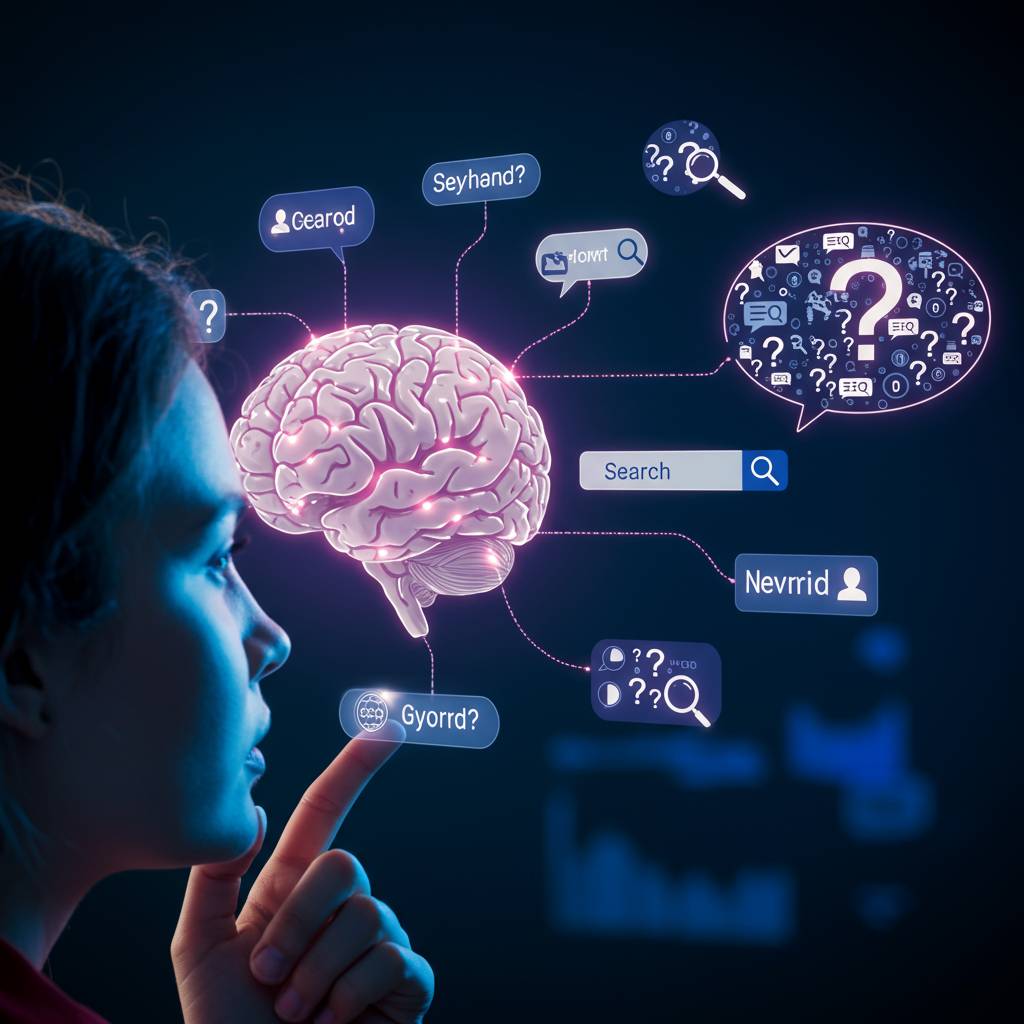
In today’s digital landscape, successful SEO is no longer just about keywords and backlinks. The true competitive edge lies in understanding the psychology that drives user behavior. Why do people search the way they do? What emotional triggers influence their clicks? How does cognitive processing affect their journey from query to conversion? This comprehensive guide delves into the fascinating intersection of psychology and search engine optimization, revealing how understanding user intent can transform your digital strategy. Whether you’re a seasoned SEO professional or a business owner looking to improve your online presence, the psychological insights shared here will help you connect more meaningfully with your audience and achieve better results in search rankings. By the end of this article, you’ll have practical, actionable knowledge about how the human mind influences search behavior—and how you can leverage this understanding to create content that truly resonates.
1. Unlocking the Minds of Searchers: A Deep Dive into User Intent
Search engines have evolved from simple keyword-matching tools to sophisticated platforms that understand the psychology behind each query. At the heart of effective SEO lies a fundamental concept: user intent. When someone types a query into Google, they’re not just entering words—they’re expressing a need, a desire, or a question seeking resolution.
User intent can be classified into four primary categories: informational (“how to optimize website speed”), navigational (“Facebook login page”), transactional (“buy wireless headphones”), and commercial investigation (“best SEO tools comparison”). Understanding these distinctions is crucial because they dramatically influence how you should structure your content, which keywords to target, and how to design user experiences that satisfy the underlying psychological needs of searchers.
Google’s algorithms have become increasingly adept at identifying and serving content that matches not just the keywords but the implicit intent behind them. This shift represents a fascinating intersection of psychology and technology—search engines essentially attempting to read minds through data analysis and pattern recognition.
For SEO professionals and content creators, this means we must think beyond keywords and consider the emotional and practical motivations driving searches. Are users feeling anxiety about a problem they need to solve? Are they excited about a potential purchase but need validation? Are they simply trying to navigate to a familiar destination quickly?
By mapping content to these psychological states, we can create more resonant, effective SEO strategies that don’t just attract traffic—they satisfy the deeper needs that prompted the search in the first place. This approach represents the evolution from mechanical SEO techniques to a more nuanced understanding of human psychology in the digital age.
2. Why Understanding Psychology Is the Secret Weapon in Modern SEO
The intersection of psychology and SEO represents one of the most powerful yet underutilized approaches in digital marketing today. While most SEO professionals focus exclusively on technical elements like keywords, backlinks, and meta descriptions, the true competitive edge lies in understanding the human mind behind every search query.
Search engines have evolved dramatically from simple keyword-matching systems to sophisticated platforms that interpret user intent, emotional context, and behavioral patterns. Google’s algorithms increasingly prioritize content that satisfies the psychological needs driving the search in the first place. This evolution means that SEO success depends not just on what users are typing, but why they’re typing it.
Consider how psychological principles manifest in search behavior: confirmation bias leads users to click results that align with their existing beliefs; the endowment effect influences how users value information they’ve invested time in finding; and cognitive fluency determines whether content feels intuitively right or jarring. These psychological dynamics directly impact click-through rates, time on page, and conversion metrics.
The most successful SEO strategies now incorporate psychological triggers that address both conscious and unconscious motivations. For example, content structured around problem-solution frameworks taps into the psychology of relief-seeking, while authority signals throughout your website leverage the principle of social proof. Even the way you format content—with appropriate white space, visual hierarchies, and cognitive chunking—can dramatically improve engagement based on how the human brain processes information.
By applying psychological principles to your keyword research, content creation, and user experience design, you can create digital experiences that don’t just rank well but genuinely resonate with human needs. In an AI-dominated search landscape, this human-centered approach is becoming the critical differentiator between content that merely exists and content that truly performs.
3. From Clicks to Conversions: Mapping the Psychological Journey of Search
The path from a search query to a conversion is rarely straightforward. Users navigate a complex psychological landscape before making a decision to purchase, subscribe, or engage with your content. Understanding this journey is essential for optimizing your SEO strategy beyond just rankings.
When users click on your search result, they’re expressing initial interest, but this is merely the beginning. The psychological journey typically follows a pattern: awareness, consideration, and decision. Each stage requires different content approaches to nurture prospects through their decision-making process.
At the awareness stage, users are seeking information and education. They’re exploring options and defining their problems. Content that addresses pain points and provides clear, valuable insights performs best here. The psychology at play involves curiosity and information-gathering.
Moving to consideration, users compare alternatives and evaluate solutions. This is where detailed product comparisons, case studies, and testimonials become powerful. Psychologically, users seek validation and risk reduction. Your content must address potential objections and provide evidence of effectiveness.
The decision stage represents the culmination of the psychological journey. Here, users need final reassurance and a clear path to action. Simplified checkouts, persuasive calls-to-action, and urgency triggers align with the psychology of commitment and loss aversion.
What makes this journey complex is that different users arrive at your site at different stages. Your content strategy must accommodate various entry points and psychological states. Heat mapping and user session recordings can reveal how users actually navigate your site, often in non-linear patterns.
Micro-conversions—small actions like newsletter signups or downloading resources—provide insight into psychological progression. These steps indicate deepening engagement and trust, serving as valuable metrics beyond the final conversion.
To effectively map this psychological journey, implement tools like Google Analytics to track user paths through your site. Analyze where users drop off and identify friction points that disrupt their psychological progression toward conversion.
Remember that mobile users often experience a different psychological journey than desktop users. Mobile searches frequently indicate higher intent and immediacy, but with different attention spans and interaction patterns. Your content must adapt accordingly.
The psychological journey from search to conversion isn’t just about what users do—it’s about understanding why they do it. By aligning your content strategy with these psychological principles, you create a seamless pathway that guides users naturally toward conversion while building lasting trust in your brand.
4. 5 Psychological Principles That Drive Successful SEO Strategies
Understanding the psychological principles that influence user behavior is critical for developing effective SEO strategies. When we align our SEO efforts with how people think and make decisions, we create more engaging and successful digital experiences. Here are five key psychological principles that can dramatically improve your SEO results:
1. The Principle of Social Proof: Humans naturally look to others for guidance on what to believe and how to act. Incorporating testimonials, reviews, case studies, and user-generated content doesn’t just build trust—it signals to search engines that your content is valuable. Google’s algorithms increasingly prioritize content that demonstrates genuine user engagement and satisfaction.
2. The Scarcity Principle: People value what they perceive as rare or limited. Creating time-sensitive content, exclusive offers, or highlighting limited availability can increase urgency and click-through rates. This behavioral trigger can reduce bounce rates and increase dwell time—metrics that search engines use to evaluate content quality.
3. The Reciprocity Principle: When people receive something valuable, they feel compelled to give something back. Providing genuinely helpful, in-depth content without requiring immediate action creates a sense of indebtedness. This leads to higher engagement rates, shares, and backlinks—all critical SEO factors that algorithms interpret as indicators of content quality.
4. The Consistency Principle: Humans have a deep psychological need to be consistent with their previous actions and commitments. Creating content pathways that guide users from basic information to more specific, actionable content aligns with how people make decisions. This sequential approach reduces bounce rates and increases page views per session, signaling to search engines that your content satisfies user intent.
5. The Authority Principle: People tend to follow the lead of credible, knowledgeable experts. Establishing authority through well-researched content, expert contributions, proper citations, and industry credentials helps search engines identify your content as trustworthy. Google’s E-E-A-T guidelines (Experience, Expertise, Authoritativeness, and Trustworthiness) directly reflect this psychological principle in their ranking methodology.
Implementing these psychological principles doesn’t just improve user engagement metrics—it fundamentally aligns your SEO strategy with how search engines evaluate content quality. By understanding and leveraging these aspects of human psychology, you can create content that naturally satisfies both users and algorithms, resulting in sustainable organic visibility and more meaningful connections with your audience.
5. Beyond Keywords: How User Psychology Shapes Search Behavior
While keywords remain foundational to SEO, understanding the psychological drivers behind search behavior reveals a much more complex landscape. Users don’t just type words into search engines—they express needs, desires, frustrations, and intentions. This psychological dimension of search behavior goes far beyond keyword matching.
Search intent typically falls into four main categories: informational (“how to fix a leaky faucet”), navigational (“Facebook login”), transactional (“buy iPhone 13”), and commercial investigation (“best running shoes for flat feet”). But within these categories lies a rich tapestry of emotional drivers and cognitive processes.
Consider how anxiety influences search behavior. Someone experiencing health anxiety might use longer, more specific queries and click on multiple results, comparing information across sources. Their search patterns reveal a need for reassurance, not just information. Google’s algorithms have evolved to recognize these behavioral patterns, prioritizing comprehensive, authoritative content for such queries.
Decision fatigue also shapes search behavior. As consumers face overwhelming choices, they increasingly rely on specific, long-tail searches to narrow options. Phrases like “best affordable laptop for video editing under $800” reflect a psychological need to simplify decision-making. Content that acknowledges this complexity while offering clear comparisons performs particularly well.
The psychological principle of social proof manifests in searches containing “reviews,” “ratings,” or “what others think.” This reflects our inherent trust in collective wisdom when making decisions. Search engines prioritize content that incorporates authentic social validation, recognizing its importance in the user journey.
Local search behavior reveals strong psychological ties to community and convenience. The proximity bias—our tendency to value nearby options—explains why “near me” searches have increased by over 900% in recent years. Google’s emphasis on local intent demonstrates how deeply user psychology influences search algorithm development.
Effective SEO practitioners must think like psychologists, not just technicians. They must analyze the emotional subtext of queries, understand cognitive biases affecting search behavior, and craft content that responds to both explicit and implicit needs. Tools like search analytics, heatmaps, and user testing provide windows into these psychological dimensions.
By moving beyond keywords to embrace user psychology, marketers can create content that resonates on a deeper level, meeting users at their point of need rather than simply matching their query terms. This psychological approach represents the evolution of SEO from a mechanical process to a deeply human one.


0件のコメント