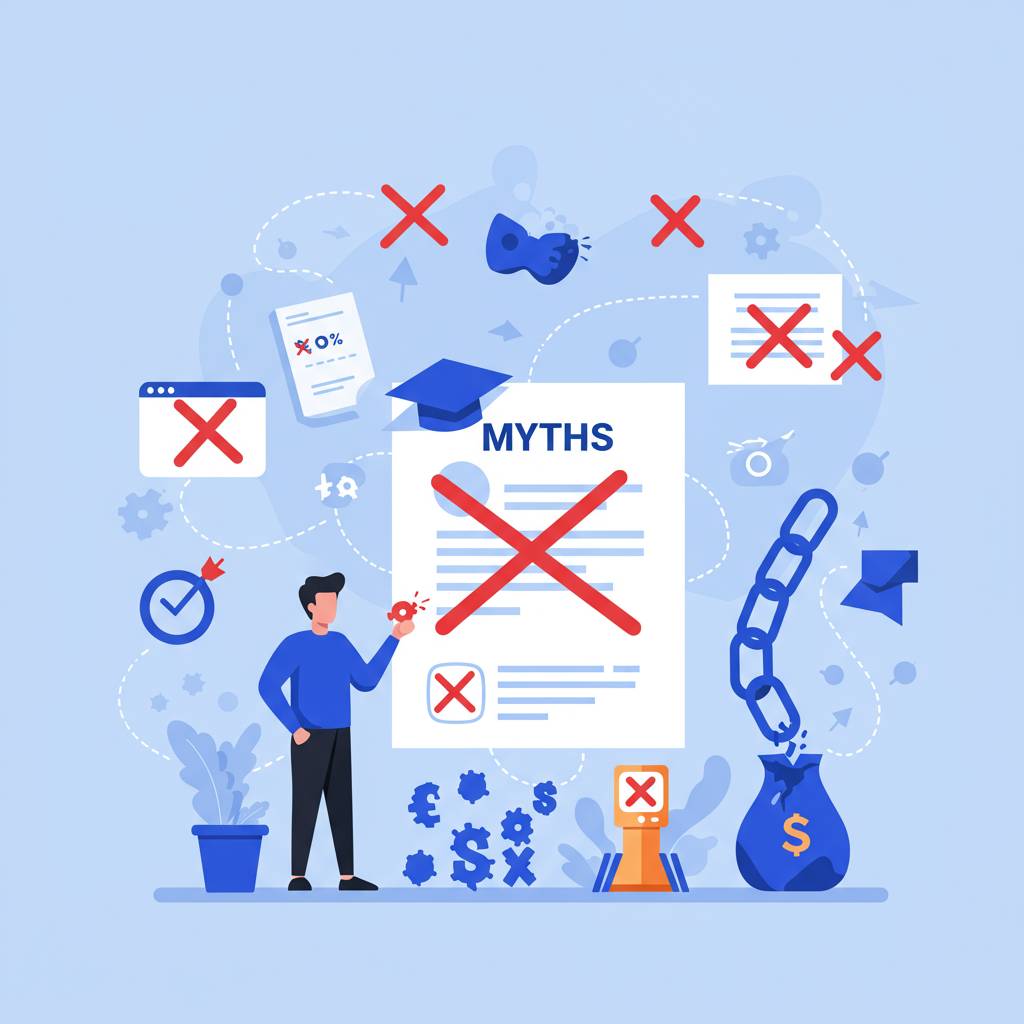
Are you pouring hours and resources into SEO tactics that simply don’t work? In the ever-evolving landscape of search engine optimization, separating fact from fiction has become increasingly challenging. Many businesses continue to follow outdated practices and misconceptions that not only waste valuable time but may actually harm their search rankings and digital presence.
With Google’s algorithms becoming more sophisticated by the day, it’s critical to base your SEO strategy on evidence rather than hearsay. This comprehensive guide will expose the most damaging SEO myths that might be sabotaging your website’s performance and costing you significant traffic and revenue opportunities.
Whether you’re a seasoned digital marketer or a business owner managing your own online presence, understanding what truly impacts your search visibility in 2023 could be the difference between page one rankings and digital obscurity. Read on as we consult with leading industry experts to debunk these persistent myths and reveal what strategies actually drive sustainable results.
1. The Top 10 SEO Myths That Are Costing You Traffic and Revenue
Search engine optimization continues to evolve, yet many marketers and business owners cling to outdated practices that no longer deliver results. These SEO myths not only waste valuable resources but actively harm your digital marketing efforts. Let’s expose the top 10 SEO myths that might be sabotaging your website’s performance:
1. Keyword Stuffing Still Works: Cramming keywords into your content doesn’t fool modern search algorithms. Google’s sophisticated AI can detect natural language patterns and prioritizes user experience over keyword density. Focus on creating valuable, readable content that naturally incorporates relevant terms.
2. Meta Keywords Matter: Major search engines like Google no longer consider meta keywords in their ranking algorithms. Your time is better spent optimizing title tags, meta descriptions, and actual content.
3. More Pages Equal Better Rankings: Quality trumps quantity every time. Publishing numerous low-quality pages dilutes your site’s authority and can trigger penalties. Instead, develop comprehensive, authoritative content that thoroughly addresses user search intent.
4. Exact Match Domains Guarantee Rankings: While domain names with exact keywords once provided an advantage, Google has significantly reduced this impact. Brand value, content quality, and user experience now carry far more weight than keyword-stuffed domains.
5. Link Building Is Dead: Links remain fundamental to search algorithms, but the emphasis has shifted to quality over quantity. A few authoritative, relevant backlinks outperform hundreds of spammy links from low-quality sites. Companies like Moz and Ahrefs continue to emphasize the correlation between quality backlinks and rankings.
6. Social Media Signals Directly Impact Rankings: While social media visibility benefits your brand, major search engines have confirmed they don’t use social signals as direct ranking factors. However, social platforms can drive traffic and increase content visibility, indirectly supporting SEO goals.
7. SEO Is a One-Time Effort: Perhaps the most dangerous myth is treating SEO as a set-it-and-forget-it task. SEO requires ongoing optimization, content refreshes, and adaptations to algorithm changes. Leading companies like HubSpot continually update their SEO strategies to maintain their competitive edge.
8. Mobile Optimization Is Optional: With Google’s mobile-first indexing, neglecting mobile optimization directly impacts rankings across all devices. Sites not optimized for mobile experience significant penalties in search visibility.
9. Long-Form Content Always Ranks Better: While comprehensive content often performs well, length alone doesn’t guarantee success. Content must match user intent, regardless of word count. Some queries are best answered concisely, while others require in-depth exploration.
10. You Need to Submit Your Site to Google: Search engines automatically discover and index websites through links. While submitting a sitemap via Google Search Console helps indexing efficiency, it’s not mandatory for ranking and won’t compensate for poor content or technical issues.
Understanding these SEO realities allows you to allocate resources effectively, focusing on strategies that actually improve visibility and drive qualified traffic. Companies implementing evidence-based SEO practices consistently outperform competitors still following outdated myths.
2. Why Your SEO Strategy Isn’t Working: Debunking Dangerous Myths
Many businesses invest significant resources into SEO strategies that simply don’t deliver results. If you’re feeling frustrated by lackluster performance despite your best efforts, you might be falling victim to dangerous SEO myths. Let’s examine why your current approach may be failing and separate fact from fiction.
One prevalent misconception is that keyword stuffing still works. Search engines have evolved dramatically, with Google’s sophisticated algorithms now prioritizing user intent and content quality over keyword density. Cramming keywords unnaturally into your content not only creates a poor reading experience but can actually trigger penalties.
Another harmful myth is that meta tags are the primary ranking factor. While meta descriptions and title tags remain important for click-through rates, they have minimal direct impact on rankings compared to content quality, backlink profiles, and user experience metrics.
Many marketers still believe more content automatically equals better rankings. This “quantity over quality” approach often leads to thin, repetitive content that provides little value to users. Search engines now prioritize comprehensive, authoritative content that thoroughly addresses user queries.
The obsession with exact-match domain names represents another outdated tactic. While domain relevance matters, Google has significantly reduced the weight given to keyword-stuffed domains in favor of sites demonstrating expertise and authority.
Perhaps most dangerously, some businesses still engage in black-hat link building, purchasing low-quality backlinks in bulk. This short-term strategy inevitably backfires when algorithm updates identify and penalize manipulative linking patterns.
Social signals, despite popular belief, don’t directly impact organic rankings. While social media engagement can increase content visibility and drive traffic, it’s not a core ranking factor.
Finally, many businesses mistakenly view SEO as a one-time effort rather than an ongoing process. Search algorithms continuously evolve, competitive landscapes shift, and user behaviors change—requiring constant adaptation of SEO strategies.
By abandoning these counterproductive myths and focusing on creating valuable content, building legitimate backlinks, optimizing for user experience, and staying current with algorithm changes, you’ll develop an SEO strategy that delivers sustainable results rather than temporary gains or penalties.
3. SEO Experts Reveal: Popular Tactics That Actually Hurt Your Rankings
The digital marketing landscape is filled with misconceptions, and nowhere is this more evident than in SEO practices. Many website owners continue implementing tactics that not only waste resources but actively damage their search rankings. Let’s explore what leading SEO professionals identify as harmful practices still prevalent today.
Keyword stuffing remains one of the most destructive yet persistent tactics. While keywords are essential, Google’s algorithms have evolved significantly to detect unnatural keyword density. Matt Cutts, former head of Google’s webspam team, has repeatedly emphasized that content should be written for users first, not search engines. When content reads unnaturally due to excessive keyword repetition, both algorithms and visitors notice—resulting in higher bounce rates and potential penalties.
Another counterproductive tactic is purchasing backlinks in bulk. “Quality over quantity has never been more important in link building,” explains Rand Fishkin, founder of SparkToro. Mass-purchased links from low-quality sites create unnatural linking patterns that trigger red flags in Google’s algorithms. Instead, focus on earning links through valuable content and genuine relationship building.
Hidden text and cloaking techniques—showing different content to search engines than to users—continue to appear despite being explicitly against Google’s guidelines. These black-hat techniques might provide temporary ranking boosts but inevitably lead to manual penalties that can take months or years to recover from.
Duplicate content without proper canonicalization represents another common mistake. When identical or substantially similar content appears across multiple URLs without proper attribution, search engines struggle to determine which version to index and rank. This dilutes ranking potential and can trigger algorithmic filters designed to reduce content redundancy.
Perhaps most surprising is how participating in irrelevant link exchanges can harm rankings. Many businesses still engage in reciprocal linking schemes without considering topical relevance. Google’s John Mueller has clarified that irrelevant links provide little value and may actually trigger link scheme penalties when done systematically.
Instead of these counterproductive tactics, focus on creating exceptional user experiences, publishing original research, optimizing for relevant search intent, and building authentic relationships within your industry. These sustainable approaches align with search engines’ ultimate goal: connecting users with the most valuable content for their queries.
4. Stop Wasting Your Marketing Budget: SEO Myths Google Wants You to Ignore
Many businesses continue to pour valuable marketing dollars into outdated SEO tactics that Google has long since devalued. The search engine giant regularly updates its algorithms, yet some SEO consultants keep selling strategies that no longer deliver results. Let’s expose these budget-draining myths and redirect your resources toward what actually works.
Keyword stuffing remains one of the most persistent wastes of marketing budgets. While strategic keyword placement remains important, artificially cramming keywords into content actually triggers Google’s spam filters. Major companies like Overstock learned this lesson the hard way when they were penalized for keyword manipulation tactics. Instead, invest in creating comprehensive, valuable content that naturally incorporates relevant terms.
Another significant budget drain is paying for low-quality backlinks. Many businesses still purchase links from link farms or engage in reciprocal link schemes, despite Google explicitly stating these tactics violate their guidelines. HubSpot and Moz have published case studies demonstrating how these shortcuts lead to penalties rather than ranking improvements. Your budget is better spent developing linkable assets that naturally attract quality backlinks.
Obsessing over exact-match domains represents another outdated strategy. Companies sometimes pay premium prices for keyword-rich domains, believing this alone will boost rankings. However, Google’s EMD (Exact Match Domain) update specifically reduced the ranking power of such domains unless they offer genuine value. Companies like Apartments.com succeed not because of their domain name but because of their comprehensive content and user experience.
Finally, neglecting mobile optimization continues to waste marketing resources. With Google’s mobile-first indexing, websites that perform poorly on mobile devices see significantly reduced visibility regardless of other SEO efforts. According to SearchEngineJournal, mobile-friendly sites experience 15% higher conversion rates. Redirecting budget from outdated tactics to responsive design and mobile speed optimization delivers immediate ROI.
By avoiding these costly SEO myths, you can allocate your marketing budget toward strategies that actually improve visibility and drive qualified traffic. Focus on creating exceptional user experiences, valuable content, and genuine authority in your industry—the approaches Google consistently rewards.
5. Evidence-Based SEO: The Truth Behind Common Myths Holding Your Website Back
Digital marketing is constantly evolving, yet too many businesses continue to cling to outdated SEO practices that simply don’t work anymore. Let’s separate fact from fiction with evidence-based insights that can truly transform your website’s performance.
Myth #1: More keywords equal better rankings.
Reality: Search engines now prioritize semantic relevance over keyword density. Google’s sophisticated algorithms can recognize natural language patterns and understand content context. Focus on comprehensive coverage of topics rather than stuffing keywords. Studies from SEMrush show that top-ranking pages often use primary keywords at only 1-2% density while covering related concepts thoroughly.
Myth #2: Meta keywords still matter.
Reality: Google confirmed years ago that meta keywords have zero impact on rankings. This outdated tag is completely ignored by major search engines. Your time is better spent optimizing title tags and meta descriptions that actually influence click-through rates from search results pages.
Myth #3: Backlinks are all that matter for authority.
Reality: While backlinks remain important, their quality far outweighs quantity. A single high-authority, relevant backlink can provide more ranking power than dozens of low-quality links. Moreover, user engagement metrics like dwell time and bounce rate increasingly influence how search engines evaluate your site’s authority.
Myth #4: Social media shares directly boost SEO.
Reality: Despite widespread belief, Google has repeatedly stated that social signals aren’t direct ranking factors. However, social media visibility can indirectly benefit SEO by increasing brand awareness, driving traffic, and creating opportunities for natural link building.
Myth #5: SEO is a one-time effort.
Reality: Perhaps the most dangerous myth is that SEO can be “completed.” Successful SEO requires ongoing adaptation to algorithm updates, competitor strategies, and evolving user behavior. Companies that treat SEO as a continuous process consistently outperform those implementing occasional “SEO fixes.”
Instead of chasing myths, focus on what actually drives results: creating exceptional content that serves user intent, building a technically sound website, earning quality backlinks through valuable resources, and analyzing performance data to guide ongoing improvements. Evidence-based SEO isn’t about tricks—it’s about delivering genuine value to users while aligning with how modern search engines actually work.


0件のコメント