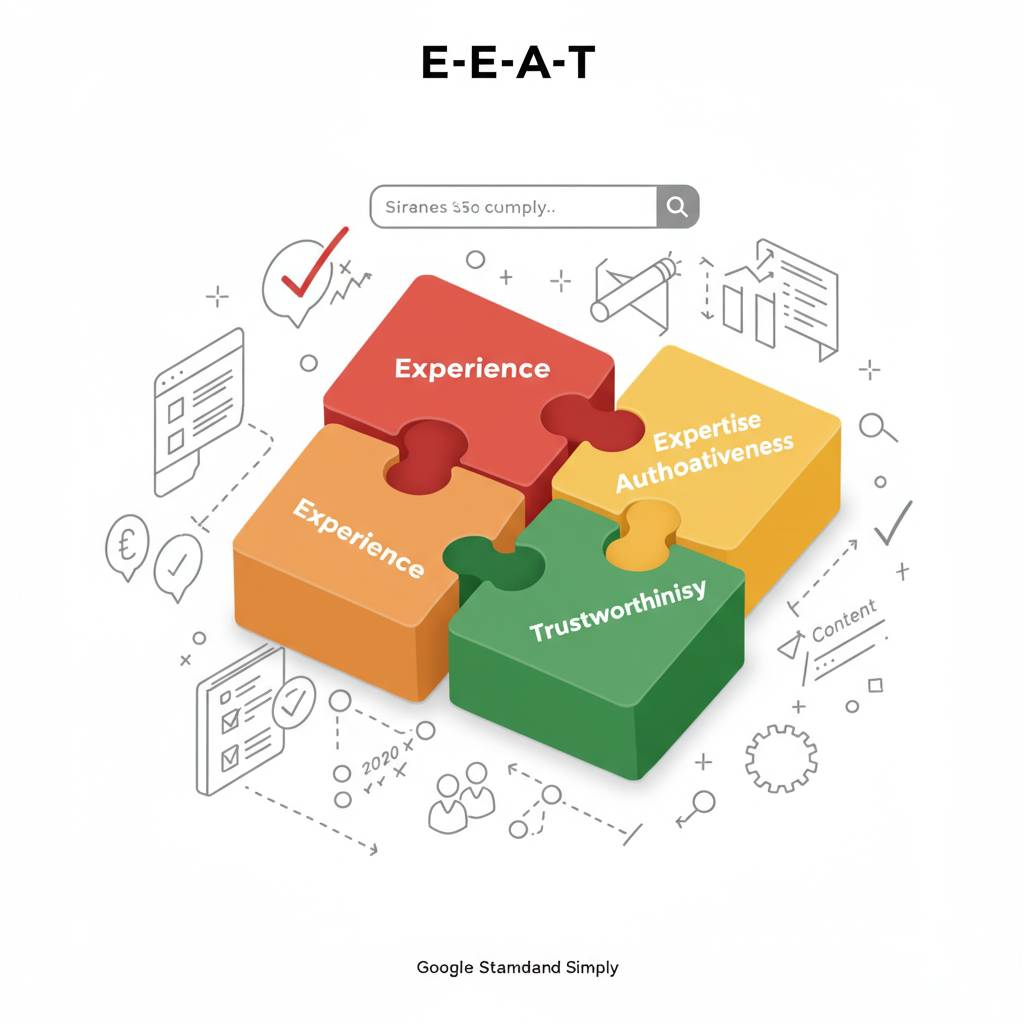
Are you struggling to keep up with Google’s ever-evolving SEO standards? If you’ve finally mastered E-A-T (Expertise, Authoritativeness, Trustworthiness), Google has moved the goalposts again with E-E-A-T. The addition of that extra “E” for Experience represents a significant shift in how Google evaluates content quality, and understanding this change could be the difference between page one rankings and digital obscurity.
In this comprehensive guide, we’ll demystify E-E-A-T and provide actionable strategies to adapt your SEO approach for 2023 and beyond. Whether you’re a seasoned digital marketer or a business owner managing your own website, this breakdown will help you navigate Google’s latest quality standards with confidence. The search landscape is evolving—and with the insights from this article, your content strategy will too.
1. What Is E-E-A-T? Breaking Down Google’s Latest SEO Framework for 2023
E-E-A-T stands for Experience, Expertise, Authoritativeness, and Trustworthiness—the four pillars Google uses to evaluate content quality. This framework represents an evolution of the previous E-A-T standard, with “Experience” being the newest addition. Google now places significant value on content created by individuals with first-hand experience in the subject matter they’re discussing.
The addition of Experience acknowledges that valuable content can come from personal involvement with a topic, not just academic or professional credentials. For example, someone who has lived with a medical condition might provide insights that complement a doctor’s clinical expertise. This shift reflects Google’s commitment to serving diverse, high-quality content that satisfies user intent.
Each component serves a specific purpose in the framework. Expertise examines whether the content creator has the necessary knowledge and skills in their field. Authoritativeness evaluates the reputation of both the creator and the website. Trustworthiness assesses the accuracy, transparency, and honesty of the content. Together with Experience, these elements help Google determine which content deserves visibility in search results.
For website owners and content creators, E-E-A-T isn’t a direct ranking factor but rather a conceptual framework that influences how Google’s algorithms assess quality. Implementing strategies that demonstrate your experience, expertise, authority, and trustworthiness can significantly improve your content’s performance in search results and build stronger connections with your audience.
2. How E-E-A-T Impacts Your Website Rankings: A Complete Guide for Digital Marketers
Google’s E-E-A-T (Experience, Expertise, Authoritativeness, and Trustworthiness) has become a critical factor in how websites are ranked. Understanding this concept isn’t just for SEO specialists—it’s essential knowledge for anyone managing online content. Let’s dive into how E-E-A-T directly influences your website’s position in search results.
First, the addition of “Experience” to the original E-A-T framework emphasizes the value of first-hand knowledge. Google now prioritizes content created by individuals who have actually used products, visited locations, or personally engaged with the topics they’re discussing. For digital marketers, this means showcasing real experiences within your content strategy is no longer optional—it’s necessary for competitive rankings.
When it comes to implementation, Google evaluates E-E-A-T through various signals across your website. Author biographies highlighting relevant credentials, clear references to sources, consistent factual accuracy, and positive user engagement metrics all contribute to stronger E-E-A-T perception. Sites like Mayo Clinic and Wirecutter rank well precisely because they excel in these areas.
For different industries, E-E-A-T requirements vary significantly. YMYL (Your Money Your Life) websites—those dealing with health, finance, or major life decisions—face the strictest scrutiny. A financial advice blog requires stronger expertise signals than a hobby site. Healthcare content demands authoritative backing from medical professionals. Understanding your specific industry’s E-E-A-T threshold is crucial for optimization efforts.
To improve your website’s E-E-A-T, focus on these actionable strategies: highlight author credentials prominently, obtain relevant industry certifications, secure high-quality backlinks from respected sites, regularly update content for accuracy, and encourage legitimate reviews and testimonials. Each of these elements signals to Google that your content deserves to rank highly.
Digital marketers should regularly audit their content through the E-E-A-T lens. Examine your site’s about page, author profiles, citation practices, and content depth. Identify weak points where expertise or authoritativeness could be more clearly demonstrated. This ongoing evaluation process ensures your content continues meeting Google’s evolving standards for quality information.
Remember that E-E-A-T improvement is a long-term strategy. Quick fixes rarely yield sustainable ranking improvements. Instead, commit to gradually building genuine expertise signals across your digital properties. The websites consistently ranking at the top of search results have invested years in establishing their E-E-A-T credentials—and maintaining search visibility requires the same dedication.
3. 10 Practical Ways to Improve Your Website’s E-E-A-T Score and Dominate SERPs
Improving your website’s E-E-A-T (Experience, Expertise, Authoritativeness, and Trustworthiness) doesn’t happen overnight, but implementing these ten actionable strategies will significantly boost your site’s standing with Google and help you climb those search engine rankings.
1. Showcase Real Experience: Share detailed case studies, personal experiences with products/services, and behind-the-scenes content that demonstrates hands-on knowledge. Google now explicitly values first-hand experience, so document your journey and learnings thoroughly.
2. Display Author Credentials Prominently: Create comprehensive author bio pages highlighting relevant qualifications, certifications, and industry experience. Link these to each article and consider adding short author snippets at the beginning of each post.
3. Earn Quality Backlinks: Focus on acquiring links from respected industry publications and authoritative websites. A single backlink from an established industry leader carries more weight than dozens from irrelevant sources.
4. Implement Clear Editorial Standards: Publish your content guidelines, fact-checking processes, and correction policies. This transparency signals to both users and search engines that your site is committed to accuracy.
5. Update Content Regularly: Conduct quarterly content audits to refresh outdated information, add new insights, and improve existing articles. Add “Last Updated” timestamps to show active content maintenance.
6. Strengthen Your About Page: Develop a compelling company story that highlights your team’s expertise, mission, and industry contributions. Include testimonials from recognized experts or clients.
7. Cite Reputable Sources: Reference peer-reviewed studies, authoritative industry reports, and primary sources. Use inline citations and create a proper bibliography section for comprehensive content.
8. Collect and Display Reviews: Implement structured data for reviews and testimonials. Encourage feedback across multiple platforms like Google Business Profile, industry-specific directories, and third-party review sites.
9. Create Comprehensive Content: Develop in-depth resources that answer questions thoroughly and anticipate reader needs. Content that satisfies user intent completely signals expertise to search engines.
10. Establish a Secure Website: Maintain updated SSL certification, implement privacy policies that comply with global regulations, and secure user data properly. Security measures directly impact the trustworthiness component of E-E-A-T.
When implementing these strategies, prioritize long-term investment over quick fixes. Building genuine expertise and authority takes time, but the sustained traffic growth and improved conversion rates make it worthwhile. Google’s systems are increasingly sophisticated at identifying real value versus superficial optimization.
Remember that E-E-A-T assessment varies by industry. YMYL (Your Money Your Life) sectors like healthcare, finance, and legal services face stricter scrutiny than hobby or entertainment sites. Tailor your E-E-A-T strategy accordingly, emphasizing credentials and accuracy for sensitive topics.
By methodically implementing these ten approaches, you’ll create a foundation of credibility that not only satisfies Google’s quality evaluators but also builds genuine user trust—the ultimate goal behind the E-E-A-T framework.
4. E-E-A-T vs. E-A-T: What Changed and Why It Matters for Your SEO Strategy
Google’s shift from E-A-T (Expertise, Authoritativeness, Trustworthiness) to E-E-A-T (Experience, Expertise, Authoritativeness, Trustworthiness) represents a significant evolution in how the search engine evaluates content quality. The addition of “Experience” isn’t just a minor update—it fundamentally changes how websites should approach content creation and SEO strategy.
The original E-A-T framework, introduced in Google’s Quality Rater Guidelines, focused on demonstrating subject matter expertise, establishing site authority, and building trustworthiness. While these elements remain crucial, Google now places additional emphasis on first-hand experience with the topics being discussed.
What exactly does “Experience” mean in this context? It refers to content created by someone who has actually used a product, visited a location, or directly participated in an activity they’re writing about. For instance, a review written by someone who has actually used a particular smartphone model carries more weight than one compiled from manufacturer specifications.
This change directly impacts several industries. For YMYL (Your Money Your Life) sites covering health, finance, or legal topics, demonstrating both professional expertise and personal experience now provides a competitive edge. E-commerce sites benefit from authentic user-generated content and detailed product experiences. Travel websites should prioritize first-hand destination accounts rather than generic descriptions.
To adapt your SEO strategy for E-E-A-T:
– Incorporate personal narratives and case studies into your content
– Feature testimonials and user experiences prominently
– Document processes with original photos and videos
– Maintain author profiles highlighting relevant life experiences
– Include specific details that only someone with hands-on experience would know
The distinction between theoretical knowledge and practical experience is now a ranking factor. Content that shows both depth of expertise and breadth of experience will likely outperform content that only demonstrates one dimension.
For businesses, this shift presents both challenges and opportunities. While content creation may require more investment to include genuine experiences, it also creates differentiation possibilities. Brands that can authentically showcase real-world application of their products or services gain an advantage over competitors relying solely on technical specifications or generic descriptions.
Google’s evolution to E-E-A-T signals a continued push toward rewarding content that genuinely helps users make informed decisions based on authentic human experiences combined with expert knowledge.
5. The Definitive Guide to E-E-A-T: How Google Evaluates Your Content Quality in 2023
5. The Definitive Guide to E-E-A-T: How Google Evaluates Your Content Quality
E-E-A-T stands for Experience, Expertise, Authoritativeness, and Trustworthiness—Google’s expanded framework for evaluating content quality. This evolution from the previous E-A-T standard reflects Google’s increasing emphasis on first-hand experience when ranking content.
Understanding each component is crucial for content creators:
Experience** focuses on whether the content demonstrates actual first-hand knowledge. Google now prioritizes content created by people who have used products, visited locations, or personally engaged with the subject matter they’re discussing.
Expertise** evaluates whether the content creator possesses the necessary knowledge or skills in their field. For medical content, this might mean credentials from accredited institutions, while for DIY topics, it could be demonstrated through detailed, accurate how-to guidance.
Authoritativeness** examines the reputation of both the content creator and the website. This is established through backlinks from reputable sources, mentions across the web, and industry recognition.
Trustworthiness** assesses the overall accuracy and reliability of the information. This includes clear sourcing, transparency about who created the content, and maintaining factual accuracy.
For websites looking to improve their E-E-A-T signals, focus on showcasing credentials, documenting first-hand experiences, citing reliable sources, maintaining factual accuracy, and building a strong online reputation through quality backlinks and positive reviews.
Major platforms like Mayo Clinic and Wirecutter excel with E-E-A-T by combining professional expertise with transparent methodologies and comprehensive first-hand testing of products or treatments they discuss.
Remember that E-E-A-T isn’t a direct ranking factor but rather a framework that influences how Google’s algorithms and quality raters evaluate content quality. By creating content that demonstrates these four qualities, you significantly increase your chances of ranking well in search results.



0件のコメント