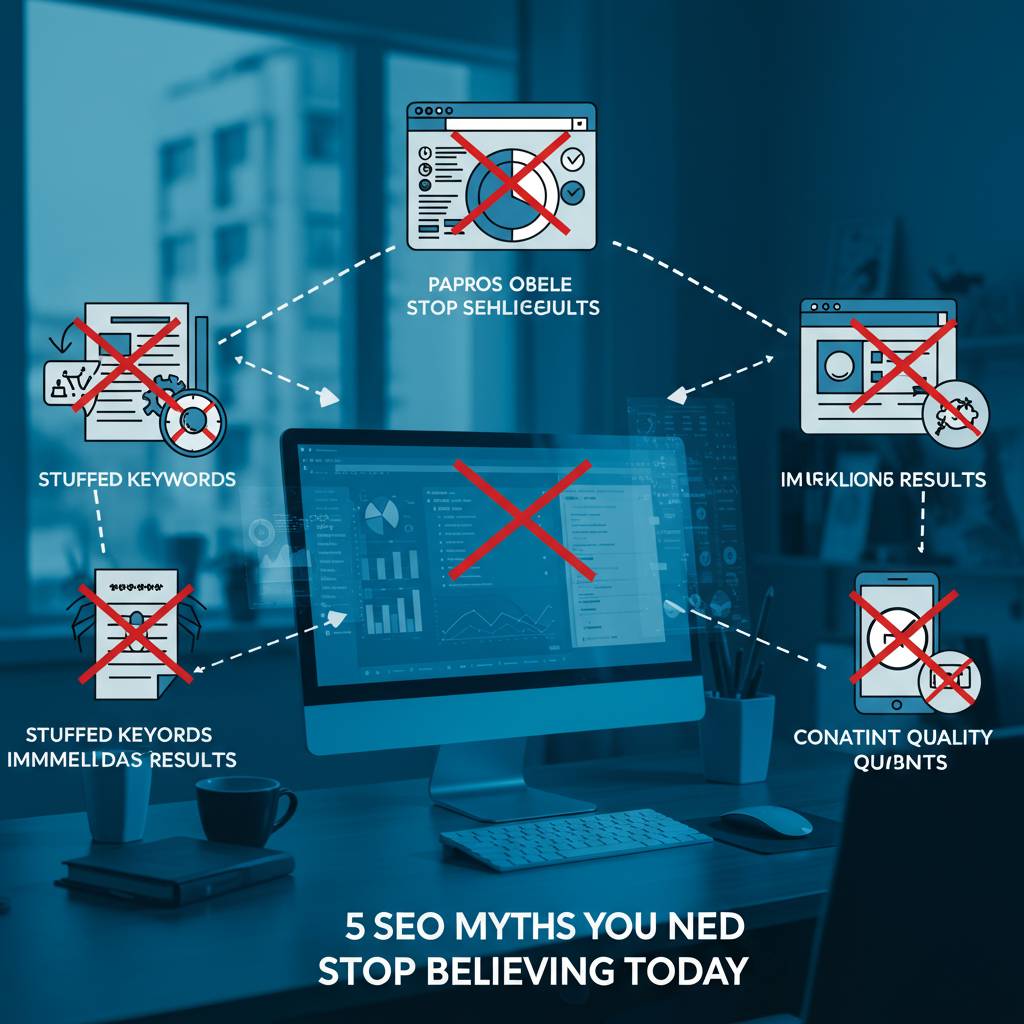
Are you struggling to improve your website’s rankings despite following all the “expert” SEO advice? You’re not alone. In today’s rapidly evolving digital landscape, search engine optimization remains one of the most misunderstood aspects of online marketing. Many businesses continue to follow outdated strategies and misconceptions that not only waste valuable resources but actively harm their online visibility.
The world of SEO is constantly changing as search engines refine their algorithms to deliver better user experiences. What worked five years ago—or even last year—might be ineffective or counterproductive today. This comprehensive guide will expose five persistent SEO myths that could be sabotaging your digital marketing efforts and preventing your website from reaching its full potential.
Whether you’re a seasoned digital marketer or a business owner trying to navigate the complex world of SEO, understanding these common misconceptions will help you develop a more effective strategy based on current best practices rather than outdated myths. Let’s separate fact from fiction and discover what truly drives search engine rankings in today’s competitive online environment.
1. The Truth Behind SEO: Debunking 5 Costly Myths That Are Hurting Your Rankings
Search engine optimization continues to evolve, yet many businesses cling to outdated SEO practices that no longer work—or worse, actively harm their rankings. As Google’s algorithms become increasingly sophisticated, what worked in the past may now be penalizing your website. Let’s clear the air and debunk the most persistent SEO myths that might be costing you valuable traffic and conversions.
Myth #1: More keywords equal better rankings
Many website owners still believe that stuffing their content with keywords will boost their SEO performance. In reality, modern search engines prioritize natural language and user intent over keyword density. Google’s algorithms, especially after the BERT and MUM updates, have become remarkably adept at understanding context and semantic relationships between words. Focus instead on creating comprehensive, valuable content that naturally incorporates relevant terms. This approach not only avoids potential penalties for keyword stuffing but also delivers a better user experience.
Myth #2: Meta descriptions directly impact search rankings
While meta descriptions remain important for click-through rates, they don’t directly influence your page’s position in search results. Google confirmed this years ago, yet the misconception persists. The value of a well-crafted meta description lies in its ability to convince users to click on your result rather than a competitor’s. Think of meta descriptions as ad copy—they should be compelling, include a call to action, and accurately represent your page content to reduce bounce rates.
Myth #3: SEO is a one-time effort
Perhaps the most dangerous myth is that SEO is a set-it-and-forget-it strategy. Search engine optimization is an ongoing process that requires consistent attention and adaptation. Google makes thousands of algorithm updates yearly, competitor strategies evolve, and user behavior changes. Companies like Amazon and Microsoft consistently invest in their SEO strategies, regularly auditing and updating their content. Sustainable SEO success demands regular content refreshes, technical maintenance, backlink monitoring, and performance analysis.
Myth #4: Social media signals directly boost SEO rankings
Despite widespread belief, Google has repeatedly stated that social signals (likes, shares, comments) don’t directly impact search rankings. However, this doesn’t mean social media is irrelevant to SEO. Strong social presence increases brand visibility, driving more traffic and potential backlinks to your site. When content from Mayo Clinic or Harvard Business Review goes viral on social platforms, they often gain natural backlinks as a result—and those backlinks definitely influence rankings.
Myth #5: You need to submit your site to Google
Many website owners still believe they need to manually submit their sites to search engines. In reality, Google’s sophisticated crawlers automatically discover new websites through links from other sites. Rather than focusing on submission, invest your efforts in technical SEO fundamentals: create a clear site structure, implement a proper XML sitemap, use robots.txt effectively, and build quality backlinks. These practices ensure Google not only finds your site but also indexes it correctly and ranks it appropriately.
By abandoning these outdated SEO myths and embracing evidence-based strategies, you’ll position your website for sustainable growth in organic search traffic. Remember that effective SEO balances technical optimization, quality content creation, and user experience—all working together to satisfy both search engines and the humans using them.
2. Why Your SEO Strategy Isn’t Working: 5 Dangerous Myths Exposed
Many businesses invest considerable resources into SEO without seeing meaningful results. If your SEO strategy isn’t delivering the expected outcomes, you might be operating under outdated or misguided assumptions. Let’s expose five dangerous SEO myths that could be sabotaging your digital marketing efforts.
Myth #1: More keywords equal better rankings
Cramming your content with keywords—known as keyword stuffing—actually hurts your SEO performance. Google’s algorithms have evolved to prioritize user experience and content quality. Instead, focus on creating valuable, relevant content that naturally incorporates target keywords at appropriate densities. Tools like Semrush or Ahrefs can help identify the right keyword balance for your content.
Myth #2: Backlinks are all that matter
While backlinks remain important ranking factors, their quality far outweighs quantity. A few authoritative links from respected industry websites deliver significantly more SEO value than dozens of low-quality links. Focus on earning backlinks through excellent content, industry relationships, and genuine value—not through link schemes that can trigger Google penalties.
Myth #3: SEO is a one-time effort
Perhaps the most damaging myth is viewing SEO as a project rather than an ongoing process. Search algorithms constantly evolve, competitors adjust their strategies, and user behaviors shift. Effective SEO requires consistent monitoring, regular content updates, and strategy refinements based on performance data and industry developments.
Myth #4: Social media doesn’t affect SEO
While social signals aren’t direct ranking factors, social media significantly impacts SEO performance indirectly. Strong social presence increases brand visibility, drives website traffic, and creates opportunities for backlinks when content gets shared widely. Integrate your social media and SEO strategies for maximum impact.
Myth #5: Technical SEO doesn’t matter anymore
With Google’s increasing emphasis on user experience, some marketers mistakenly downplay technical SEO. However, issues like slow page speeds, poor mobile optimization, broken links, and crawlability problems can severely undermine even the best content strategy. Regular technical SEO audits remain essential for maintaining search visibility.
By abandoning these outdated myths and embracing evidence-based SEO practices, you can develop a strategy that truly delivers sustainable results. Remember that effective SEO combines technical excellence, quality content creation, and strategic promotion—there are no shortcuts to lasting search success.
3. SEO Experts Reveal: 5 Common Myths That Are Wasting Your Time and Money
The SEO industry is rife with misconceptions that cost businesses millions in wasted resources. According to data from SEMrush, companies allocate an average of 41% of their marketing budget to SEO—yet many are pouring money into strategies that simply don’t work.
Leading SEO consultants from Moz, Ahrefs, and Search Engine Journal have identified five pervasive myths that continue to drain marketing budgets with minimal returns:
First, the obsession with keyword density is outdated. Google’s algorithms now prioritize semantic relevance and user intent over arbitrary keyword percentages. Rather than stuffing your content with exact-match phrases, focus on comprehensive topic coverage that naturally incorporates relevant terminology.
Second, achieving #1 rankings should not be your primary goal. Position zero (featured snippets) and high CTR listings often generate more traffic than top organic positions with poor engagement metrics. Neil Patel’s research shows positions 3-5 with compelling meta descriptions can outperform #1 rankings by up to 28% in click-through rates.
Third, more content does not equal better SEO. Publishing low-quality content at high frequency can actually damage your site’s authority. A HubSpot study revealed that businesses publishing 4-5 high-quality, in-depth articles monthly outperformed those publishing 20+ thin pieces of content.
Fourth, backlinks aren’t created equal. One relevant, authoritative link from an industry publication carries more weight than dozens of low-quality directory submissions. Quality over quantity is the mantra every successful SEO consultant emphasizes.
Finally, SEO is not a one-time effort. The algorithms evolve continuously, with Google making over 500 updates annually. Businesses that treat SEO as a set-it-and-forget-it tactic invariably see their rankings decline over time.
By redirecting resources away from these ineffective practices toward data-driven strategies, businesses can achieve sustainable organic growth while reducing their overall marketing spend. The most successful companies regularly audit their SEO activities against current best practices rather than clinging to outdated tactics.
4. The 2023 Reality Check: 5 Outdated SEO Myths That Could Be Sabotaging Your Website
The digital landscape evolves at lightning speed, yet many website owners continue to cling to outdated SEO practices that no longer work – and might actually be hurting their rankings. As search engines become increasingly sophisticated, yesterday’s SEO tactics can quickly become today’s penalties. Let’s debunk these persistent myths that could be sabotaging your website’s performance.
First, keyword stuffing is definitively dead. Google’s algorithms now prioritize natural language and user intent over keyword density. Cramming keywords into your content not only creates a poor user experience but can trigger penalties from search engines that recognize this manipulation tactic.
Second, the myth that meta keywords still matter continues to waste marketers’ time. Major search engines like Google stopped considering meta keywords in their ranking algorithms years ago, yet countless hours are still spent optimizing them. Your efforts are better directed toward compelling title tags and meta descriptions that improve click-through rates.
Third, the obsession with achieving a perfect keyword density percentage (like the once-popular 3-5%) is completely unfounded. Modern SEO focuses on comprehensive topic coverage, semantic relevance, and answering user questions rather than arbitrary keyword percentages.
Fourth, the notion that more backlinks automatically equals higher rankings is dangerously outdated. Quality dramatically outweighs quantity in today’s SEO environment. A few authoritative, relevant backlinks provide significantly more ranking power than hundreds of low-quality links, which can actually trigger penalties.
Finally, believing that SEO is a one-time effort remains perhaps the most damaging myth. SEO requires ongoing optimization, content refreshes, and adaptation to algorithm updates. Websites that implement SEO measures once and never revisit them inevitably watch their traffic decline as competitors embrace the evolving best practices.
By abandoning these outdated myths and focusing on current best practices – quality content that serves user intent, mobile optimization, page experience, and authoritative backlinks – you’ll position your website for sustainable growth in organic search visibility.
5. Stop Following These 5 SEO Myths If You Want Your Business to Succeed Online
The world of SEO is constantly evolving, yet many businesses continue to follow outdated practices that can actually harm their online presence. If you want your business to thrive in the digital landscape, it’s time to abandon these five persistent SEO myths that might be holding you back from achieving real results.
First, the myth that “more keywords equal better rankings” needs to be permanently laid to rest. Search engines have become incredibly sophisticated at detecting keyword stuffing, and this practice can trigger penalties rather than rewards. Instead, focus on creating valuable, relevant content where keywords appear naturally within the context.
Second, many still believe that “SEO is a one-time setup.” This couldn’t be further from the truth. SEO requires consistent attention, regular updates, and ongoing optimization as algorithms change and your competitors evolve their strategies. Companies like Moz and Ahrefs provide tools that help you stay on top of these changes.
Third, the idea that “meta descriptions directly impact rankings” remains widespread despite being inaccurate. While meta descriptions don’t directly influence your position in search results, they significantly affect click-through rates by providing users with a preview of your content. Craft them carefully to entice users to choose your link over others.
Fourth, “social media activity doesn’t affect SEO” is a myth that ignores the indirect benefits of social engagement. While Google has stated that social signals aren’t direct ranking factors, content that receives substantial social sharing often gains more backlinks, traffic, and engagement – all of which do impact rankings.
Finally, perhaps the most dangerous myth: “SEO results happen quickly.” Authentic, sustainable SEO is a long-term investment that typically takes months to show significant results. Companies like HubSpot have documented case studies showing that consistent SEO efforts over 6-12 months yield the most substantial returns.
By abandoning these outdated myths and embracing current best practices, you position your business to gain competitive advantage in search results. Remember that effective SEO combines technical expertise, quality content creation, and strategic planning – there are no shortcuts to lasting search visibility.


0件のコメント