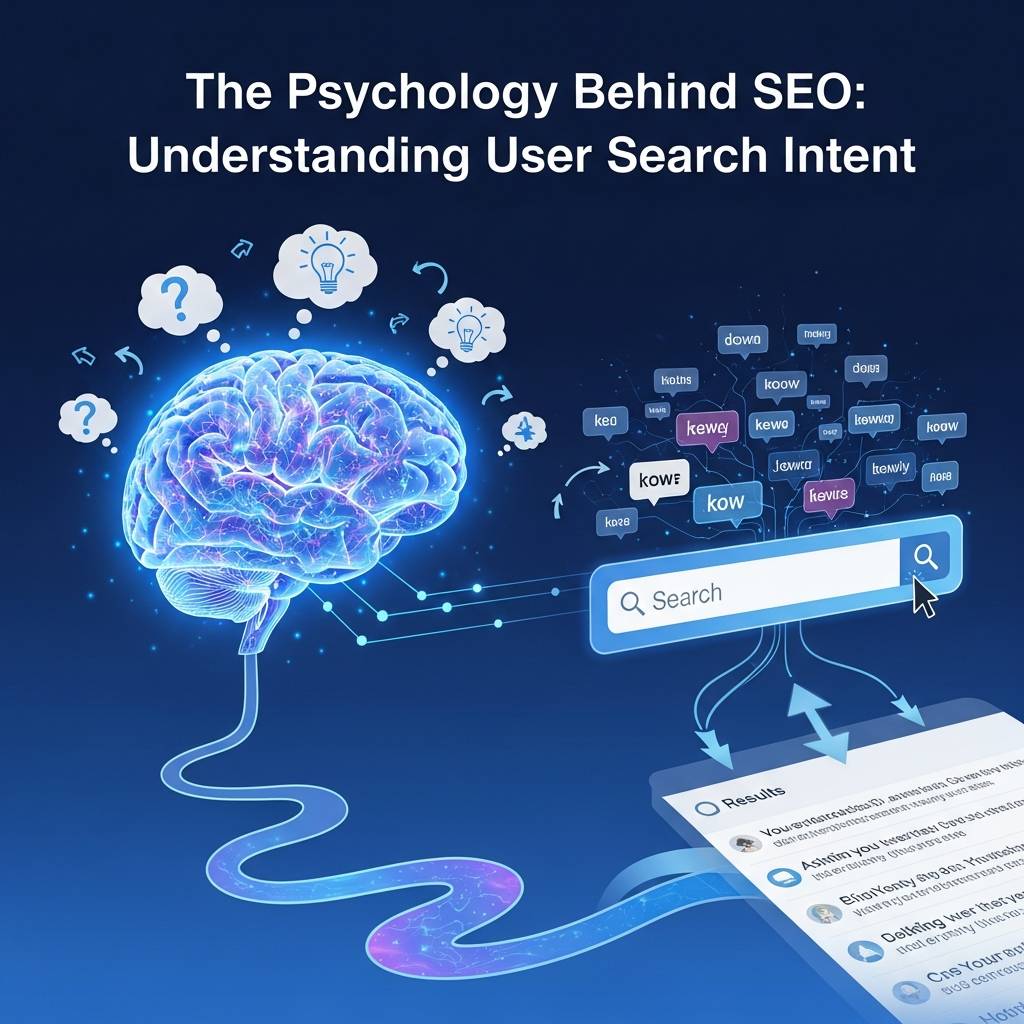
In today’s digital landscape, mastering SEO goes far beyond keywords and backlinks—it requires a profound understanding of human psychology. Why do people search the way they do? What motivates them to click certain results over others? The intersection of psychology and search behavior represents the new frontier for marketers seeking sustainable organic growth. This comprehensive guide explores the fascinating psychological principles that drive search intent and how leveraging this knowledge can transform your SEO strategy. Whether you’re a seasoned digital marketer or just beginning your SEO journey, understanding the mind behind the search query will give you the competitive edge needed to connect with your audience at the moment they need you most. Let’s explore how the human mind shapes search behavior and how you can align your content to match these deeply rooted psychological patterns.
1. How User Search Intent Drives Successful SEO Strategies
At the core of effective search engine optimization lies a fundamental psychological principle: understanding what users truly want when they type queries into search engines. User search intent isn’t just another SEO buzzword—it’s the cognitive foundation that determines whether your content resonates with both search engines and human visitors.
Search intent manifests in four primary categories: informational (“how does SEO work?”), navigational (“Facebook login”), commercial investigation (“best SEO tools”), and transactional (“buy SEO software”). Each intent represents a different psychological state and position in the customer journey. By aligning your content strategy with these intent patterns, you create relevance that search engines increasingly prioritize in their algorithms.
Google’s RankBrain and BERT updates have revolutionized how search engines interpret queries, focusing less on keywords and more on contextual meaning and user satisfaction signals. This shift means the most successful SEO strategies now incorporate intent-matching as a primary ranking factor.
Analysis of top-performing content reveals that pages satisfying user intent receive significantly lower bounce rates and higher engagement metrics. When users find exactly what they’re seeking, they spend more time consuming content, exploring related information, and ultimately converting at higher rates—whether that means signing up for newsletters, downloading resources, or making purchases.
The psychological principle of cognitive fluency also plays a critical role: when content matches intent perfectly, users experience less mental friction and form more positive associations with your brand. This seamless experience creates a virtuous cycle where satisfaction signals feed back into improved search rankings, generating a sustainable competitive advantage for businesses that master intent-based optimization.
2. Decoding the Mind of Your Searcher: A Deep Dive into Search Intent Psychology
Understanding the psychology behind why people search is arguably the most powerful SEO skill you can develop. When someone types a query into Google, they’re not just entering words—they’re expressing a need, a desire, or a problem that needs solving. This mental framework is what we call “search intent,” and it’s the golden key to creating content that truly resonates.
Search intent generally falls into four main categories: informational (“how to fix a leaky faucet”), navigational (“Facebook login”), commercial investigation (“best DSLR cameras”), and transactional (“buy iPhone 13 Pro”). But beyond these categories lies a complex web of psychological triggers that drive searching behavior.
Consider how emotional states influence searching. Someone frantically searching “stomach pain right side” at 3 AM has very different psychological needs than someone casually browsing “fun weekend activities” on Friday afternoon. The first user needs clear, authoritative information delivered quickly, while the second may appreciate exploration and inspiration.
The language people use also provides fascinating insights into their psychological state. Queries containing words like “versus,” “compare,” or “differences between” signal cognitive dissonance—the person is torn between options and seeking resolution. Meanwhile, searches including “how to” or “guide” indicate a learning mindset and readiness to absorb new information.
Maslow’s Hierarchy of Needs often manifests in search patterns too. Physiological and safety needs drive searches like “emergency plumber near me” or “symptoms of stroke,” while belonging needs might prompt queries like “how to make friends in a new city.” Self-actualization needs appear in searches such as “how to learn piano as an adult” or “career change at 40.”
Companies like Amazon and Netflix have built their empires on understanding this psychology. Netflix doesn’t just categorize content by genre—they understand the emotional journey users want to experience. Similarly, Amazon’s recommendation algorithm is built on psychological principles of complementarity and aspiration.
To apply search intent psychology to your SEO strategy, begin by asking: What emotional state is my ideal user in when searching? What cognitive biases might be at play? Are they seeking clarity, confirmation, or contradiction of existing beliefs? By answering these questions, you’ll craft content that doesn’t just match keywords but meets underlying psychological needs.
The most successful SEO professionals don’t just think like algorithms—they think like psychologists. They understand that behind every search query is a human mind with specific cognitive and emotional patterns. When you align your content with these patterns, you create something that feels almost magically relevant to your users—because you’ve addressed not just what they’re searching for, but why they’re searching in the first place.
3. Why Understanding Search Intent Will Triple Your Organic Traffic
Understanding search intent is no longer optional for serious digital marketers—it’s the cornerstone of any successful SEO strategy. When you align your content with what users are truly looking for, the results can be extraordinary, often leading to a significant boost in organic traffic.
Search intent is fundamentally about the ‘why’ behind a search query. Is someone looking for information (informational), trying to find a specific website (navigational), researching before making a purchase (commercial), or ready to buy (transactional)? Google’s algorithms have become increasingly sophisticated at identifying and serving content that best matches this intent.
Companies that have mastered search intent optimization report dramatic improvements. For example, HubSpot increased organic traffic by 215% to a key landing page by restructuring content to match informational intent. Similarly, Ahrefs saw a 677% increase in organic traffic after optimizing their keyword research tool page to better address commercial intent.
The traffic-multiplying effect of search intent optimization happens for three main reasons:
First, content that perfectly addresses search intent naturally earns higher rankings. Google prioritizes satisfaction—when users find exactly what they’re looking for, they stay longer, bounce less, and signal to Google that your content deserves higher visibility.
Second, intent-aligned content converts better. When you understand precisely what stage of the buyer’s journey your visitors are in, you can provide exactly what they need at that moment, dramatically improving conversion rates.
Finally, understanding search intent allows for more efficient content production. Instead of creating content based on guesswork, you can focus resources on creating exactly what your audience is searching for.
To leverage search intent for traffic growth, start by categorizing your target keywords by intent type. Analyze the current top-ranking pages for each keyword to understand what Google considers the best match. Then, structure your content to address that specific intent comprehensively while providing unique value that competitors miss.
The digital landscape will continue evolving, but understanding the human psychology behind search queries will always remain valuable. Master search intent, and you’ll not only see your traffic multiply—you’ll build a sustainable competitive advantage in your industry.
4. The Psychological Triggers That Make or Break Your SEO Performance
Search engines have evolved to prioritize content that aligns with psychological triggers driving user behavior. Understanding these triggers is no longer optional but essential for SEO success. The most effective SEO strategies leverage fundamental psychological principles that influence how users search, engage, and convert.
Trust signals represent the primary psychological trigger affecting search performance. When Google evaluates your site, it assesses trust indicators like authoritative backlinks, comprehensive content, and secure connections. Users subconsciously look for these same signals—professional design, testimonials, and clear contact information—before deciding whether your content deserves their attention.
Cognitive fluency dramatically impacts user experience. Content that requires minimal mental processing performs better in both search rankings and conversions. This means using clear headings, scannable paragraphs, simple language, and logical information architecture. Google’s algorithms increasingly favor content that demonstrates this psychological ease, as evidenced by core updates prioritizing user experience metrics.
The scarcity principle remains powerful even in digital environments. Content that offers exclusive information, limited-time insights, or unique perspectives naturally attracts more engagement. Search engines interpret these engagement signals as indicators of quality, creating a positive feedback loop that elevates your rankings.
Social proof significantly influences both user behavior and search algorithms. Content with high social engagement signals (comments, shares, mentions) receives preferential treatment because these actions validate its relevance and utility. This psychological trigger explains why content that generates discussion often outranks technically superior but engagement-poor alternatives.
Loss aversion—the human tendency to avoid missing opportunities—can be strategically integrated into SEO approaches. Headlines and meta descriptions leveraging FOMO (fear of missing out) typically generate higher click-through rates, which subsequently improve rankings. However, this trigger must be used authentically to avoid triggering Google’s clickbait detection mechanisms.
Implementing these psychological triggers requires a delicate balance. When executed properly, they create content that naturally satisfies both search algorithms and human psychology, resulting in sustainable SEO performance that withstands algorithm updates and changing search trends.
5. From Mind to Search Bar: The Psychology That Connects Users to Your Content
The journey from a user’s thought to a search query is fascinating psychological territory that savvy marketers must understand. When someone types words into a search engine, they’re not just entering text—they’re expressing needs, desires, frustrations, or curiosities. This cognitive pathway determines whether your content becomes their destination or remains undiscovered.
Research shows that search behavior follows predictable psychological patterns. Users experiencing an information gap feel a cognitive discomfort that motivates them to seek answers. This phenomenon, known as the Zeigarnik Effect, creates tension that can only be resolved through finding relevant information. Your SEO strategy must align with these psychological moments of need.
Different emotional states trigger different search behaviors. A person feeling anxious about a health symptom uses more emotional language and longer queries than someone simply comparing product features. By analyzing search patterns through tools like Google Search Console and user session recordings, you can identify these emotional triggers and craft content that meets users at their psychological point of need.
The language processing centers in our brains influence how we formulate queries. Most users begin with broad terms, then refine searches based on what they see. This “search refinement loop” represents crucial opportunities to capture attention. Creating content that addresses both initial broad searches and specific follow-up queries increases your chance of connection at multiple points in the user’s journey.
Cognitive biases also affect search behavior. The availability heuristic leads people to search for terms they commonly encounter, while confirmation bias drives them toward results that support existing beliefs. Understanding these biases helps you anticipate search patterns and position content accordingly.
Mobile searching introduces additional psychological factors. Users on mobile devices exhibit more impatience, use more voice search (which tends toward natural language), and are more likely to search based on immediate contextual needs. Location-based searches increase by 900% on mobile devices, reflecting the immediacy of mobile user psychology.
To leverage search psychology effectively, implement these strategies:
– Create content addressing both logical and emotional motivations behind searches
– Use natural language that mirrors how people think, not just how they type
– Structure content to provide quick answers for scanning readers while offering depth for thorough researchers
– Incorporate visual elements that align with cognitive processing preferences
– Design your user experience to minimize cognitive load
The connection between psychology and search behavior isn’t just theoretical—it’s the fundamental mechanism that brings users to your content. By understanding this critical relationship, you transform SEO from a technical exercise into a powerful tool for human connection.

0件のコメント