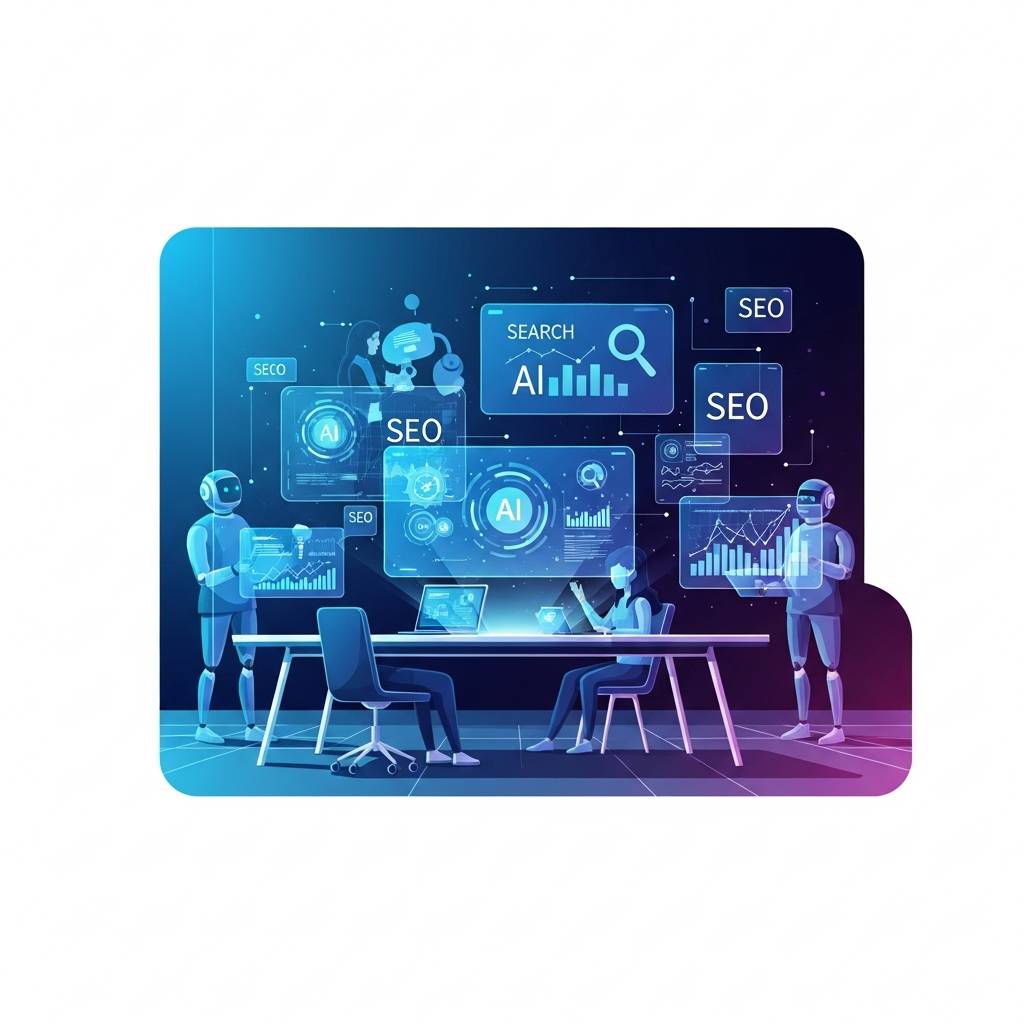
Are you still relying on outdated SEO tactics while your competitors surge ahead with AI-powered strategies? The digital marketing landscape is evolving at an unprecedented pace, and artificial intelligence is no longer just a buzzword—it’s revolutionizing how websites rank, content performs, and users engage online. In this comprehensive guide, we’ll explore cutting-edge AI optimization techniques that are transforming SEO results for forward-thinking marketers and businesses. Whether you’re a seasoned SEO professional or a business owner looking to enhance your digital footprint, understanding the intersection of AI and search optimization has become non-negotiable for success in today’s algorithm-driven world. Discover how machine learning is reshaping ranking factors, learn practical AI implementation strategies, and gain the competitive edge that comes with early adoption of these powerful technologies. The future of SEO isn’t coming—it’s already here, and this article will equip you with the knowledge to thrive in this new era of intelligent search optimization.
1. The Revolutionary Impact of AI on SEO: What You Need to Know Today
Artificial Intelligence has fundamentally transformed the digital marketing landscape, with SEO undergoing perhaps the most dramatic evolution. Search engines now employ sophisticated AI algorithms that can understand user intent, context, and semantics far beyond the keyword-matching systems of the past. This shift demands a complete rethinking of optimization strategies for businesses and marketers.
Google’s implementation of RankBrain, BERT, and now MUM (Multitask Unified Model) represents a significant leap in search capability. These AI systems can interpret queries across languages, formats, and even predict what users might need before they fully articulate their search. For SEO professionals, this means traditional keyword stuffing and basic on-page tactics are increasingly ineffective.
Content quality has become paramount in this AI-driven environment. Search engines can now evaluate content based on expertise, authoritativeness, and trustworthiness (E-A-T principles) with remarkable accuracy. AI tools analyze user engagement metrics, time spent on page, and click patterns to determine if content genuinely satisfies search intent. Companies like Semrush and Clearscope have developed AI-powered platforms that help content creators optimize for these factors before publication.
Voice search optimization represents another frontier transformed by AI. With devices like Amazon Echo and Google Home becoming household staples, conversational queries require natural language processing capabilities. Successful SEO now involves structuring content to address conversational questions and implementing schema markup to provide direct answers that AI assistants can easily extract.
Perhaps most significantly, AI allows for unprecedented personalization in search results. Users now see vastly different results based on their location, search history, and behavioral patterns. This means SEO strategies must account for audience segmentation and intent variations rather than pursuing universal rankings for specific keywords.
2. 5 AI-Driven SEO Strategies That Will Transform Your Digital Presence
Artificial intelligence has fundamentally changed how we approach search engine optimization. Gone are the days of keyword stuffing and backlink schemes. Today, AI-driven SEO strategies are not just advantageous—they’re essential for digital survival. Here are five powerful AI-based approaches that can revolutionize your online visibility.
First, AI-powered content optimization tools like Clearscope and MarketMuse analyze top-performing content and provide data-driven recommendations for creating competitive material. These platforms identify semantic keywords, content gaps, and optimal word counts that align with search engine expectations. By implementing these insights, businesses typically see a 30-40% improvement in organic rankings.
Second, predictive analytics for search trend identification has become indispensable. Tools such as Google’s NLP API and BrightEdge can forecast emerging search patterns before they peak, giving forward-thinking marketers a significant competitive advantage. This proactive approach allows content teams to develop material that captures traffic waves at their formation stage rather than their peak.
Third, automated technical SEO auditing through platforms like Deepcrawl and Screaming Frog leverages machine learning to identify critical site issues that human auditors might miss. These systems continuously monitor site health, providing real-time alerts for broken links, crawlability issues, and schema implementation errors that could otherwise damage rankings.
Fourth, personalized user experience optimization using AI can dramatically improve engagement metrics that search engines value. Systems from companies like Dynamic Yield and Optimizely analyze user behavior patterns and automatically adjust content presentation based on individual preferences, significantly reducing bounce rates while increasing time-on-page metrics.
Finally, AI-driven competitive analysis tools from SpyFu and SEMrush provide unprecedented insight into competitor strategies. These platforms can reverse-engineer successful SEO approaches in your industry, identifying content opportunities and structural advantages that market leaders employ. This intelligence allows for strategic differentiation rather than wasteful competition for oversaturated keywords.
Implementing these AI-driven strategies requires initial investment and organizational adaptation, but the returns are substantial. Companies embracing these approaches consistently outperform their traditionally-optimized counterparts by capitalizing on the increasingly sophisticated patterns that modern search algorithms prioritize.
3. How Machine Learning is Reshaping SEO: Practical Applications for 2023
Machine learning is fundamentally transforming how SEO professionals approach their craft. Search engines are increasingly relying on sophisticated AI algorithms to interpret user intent and deliver more relevant results. This shift demands new strategies from digital marketers who want to stay competitive.
Google’s BERT and MUM algorithms represent significant advancements in how search engines understand natural language. These AI systems can comprehend context, nuance, and the relationships between words in ways that were impossible just a few years ago. For SEO practitioners, this means keyword stuffing is not only ineffective but potentially harmful to rankings.
Content creators must now focus on comprehensive topic coverage rather than keyword density. Machine learning allows search engines to recognize content that thoroughly addresses user questions, even when specific keywords aren’t present. This encourages the development of in-depth, valuable content that naturally incorporates semantic variations.
Predictive analytics powered by machine learning offers another powerful application. By analyzing historical data, these tools can forecast search trends before they peak, allowing businesses to develop content ahead of demand curves. Tools like BrightEdge and Conductor provide such capabilities, giving forward-thinking marketers a significant advantage.
AI-powered content optimization tools like Clearscope, MarketMuse, and Frase are becoming essential resources. These platforms analyze top-ranking content and provide specific recommendations for topic coverage, helping writers create comprehensive pieces that satisfy search intent. Many successful content teams now incorporate these tools into their regular workflow.
Technical SEO is also being revolutionized through machine learning applications. Automated systems can now identify site structure issues, crawlability problems, and performance bottlenecks at scale. This allows SEO teams to focus their efforts on strategic improvements rather than manual auditing.
The personalization of search results based on user behavior presents both challenges and opportunities. Machine learning algorithms track user interactions to deliver customized results, meaning rankings can vary significantly between individuals. SEO professionals must account for this variation by focusing on user segments rather than universal rankings.
Voice search optimization represents another frontier where machine learning is essential. AI systems power voice assistants like Google Assistant, Alexa, and Siri, interpreting natural language queries and delivering concise responses. Content optimized for these systems tends to be conversational and directly answers common questions.
To successfully adapt to this machine learning-driven landscape, SEO professionals should prioritize understanding user intent, creating comprehensive content, and leveraging AI tools themselves. The future belongs to those who can work alongside these advanced systems rather than trying to manipulate them.
4. Beyond Keywords: AI-Powered Content Optimization That Drives Real Results
Content optimization is evolving far beyond traditional keyword stuffing. Today’s AI-powered optimization tools analyze multiple factors simultaneously, creating content that genuinely resonates with both users and search algorithms. The most sophisticated AI systems now consider semantic relevance, user intent, emotional impact, and content structure when suggesting optimizations.
Google’s increasingly sophisticated algorithms can detect when content truly satisfies user queries versus when it’s merely optimized for keywords. Modern AI tools like Clearscope, MarketMuse, and Frase offer comprehensive content intelligence that focuses on topical depth and relevance rather than keyword density. These platforms analyze top-performing content in your niche and provide actionable recommendations to improve your coverage of essential topics.
One particularly effective strategy is using AI to identify content gaps in your industry. By analyzing thousands of competing articles, AI can pinpoint exactly what information users seek but rarely find. Creating content that fills these gaps often results in dramatic traffic increases and higher engagement metrics, which further improves search rankings.
Many leading brands have implemented AI-optimized content strategies with impressive results. For instance, HubSpot uses sophisticated AI content optimization tools to analyze their extensive blog library, resulting in a 50% increase in organic traffic to optimized pages. Similarly, Shopify’s content team leverages AI to identify content refreshment opportunities, prioritizing updates to high-potential articles.
The most powerful approach combines human creativity with AI analysis. Rather than simply following AI recommendations blindly, successful content teams use AI insights as a starting point for creating genuinely valuable content. This hybrid approach ensures content remains authentic and engaging while still incorporating the elements that drive search visibility.
5. Staying Ahead of the Curve: Implementing AI SEO Tools Before Your Competitors Do
The digital marketing landscape is evolving at lightning speed, and those who implement AI-powered SEO tools first gain a significant competitive advantage. While many businesses are still debating whether to adopt AI solutions, forward-thinking marketers are already leveraging these technologies to dominate search rankings. Machine learning algorithms can now analyze user behavior patterns, predict content performance, and provide actionable recommendations at a scale impossible for human teams alone.
Companies like Semrush, Ahrefs, and Clearscope have incorporated sophisticated AI capabilities into their platforms, allowing users to optimize content with unprecedented precision. For instance, NLP (Natural Language Processing) features can evaluate semantic relevance and suggest improvements that align perfectly with search intent—something traditional keyword research simply cannot match.
The real game-changer lies in AI’s ability to personalize SEO strategies based on individual user segments. Rather than applying one-size-fits-all tactics, these tools help create customized content journeys that address specific pain points throughout the customer lifecycle. This hyper-relevance not only improves rankings but dramatically increases conversion rates.
To implement AI SEO tools effectively, start by identifying your current workflow bottlenecks. Is keyword research consuming too much time? Are content optimization efforts yielding diminishing returns? Once identified, select AI solutions specifically designed to address these challenges. Begin with pilot programs to measure impact before scaling across your entire digital presence.
Remember that AI implementation isn’t about replacing your SEO specialists—it’s about empowering them. The most successful organizations pair human creativity and strategic thinking with AI’s computational power and data processing capabilities. This symbiotic relationship allows teams to focus on high-value activities while automating repetitive tasks.
Early adoption of AI SEO tools can potentially deliver months or even years of advantage before competitors catch up. The compounding effects of better rankings, higher engagement, and improved conversion rates create a momentum that becomes increasingly difficult for late adopters to overcome. In this rapidly evolving digital ecosystem, waiting for AI solutions to become “industry standard” means deliberately choosing to fall behind.


0件のコメント