
In an era where digital landscapes are shifting at an unprecedented pace, the convergence of traditional search engines and artificial intelligence has created a new frontier for online visibility. For years, businesses have relied on established Search Engine Optimization (SEO) practices to secure their place in rankings, but the rapid rise of Large Language Models has necessitated a crucial evolution: the adoption of Generative AI Optimization (GAO). It is no longer sufficient to simply target keywords; sustainable success now requires a deep, scientific understanding of how algorithms interpret concepts and how users interact with evolving technologies. This article delves into the analytical and neurological foundations of modern search, providing you with a robust framework to future-proof your digital presence. By combining the precision of data science with the adaptability of GAO, we explore strategies that not only decode the latest algorithms but also ensure your content resonates powerfully with both sophisticated AI models and human audiences for maximum impact.
1. Future-Proof Your Rankings: Combining the Science of SEO and GAO for Maximum Visibility
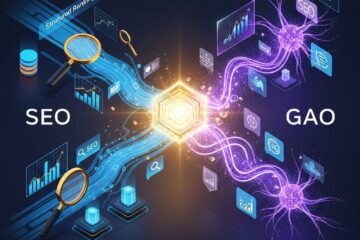
The digital landscape is undergoing a seismic shift, moving beyond traditional keyword matching into the realm of semantic understanding and artificial intelligence. To maintain and grow online visibility, businesses must now master a dual approach: classical Search Engine Optimization (SEO) and the emerging discipline of Generative AI Optimization (GAO). While SEO focuses on ranking within search engine results pages (SERPs) like Google and Bing, GAO targets the large language models (LLMs) powering tools such as ChatGPT, Claude, and Google’s Gemini, ensuring your brand is cited as a primary source in AI-generated answers.
Combining these strategies is not just an option; it is essential for future-proofing your digital presence. The science behind this integration lies in Entity-Based Optimization. Search engines and AI models no longer just look for strings of text; they look for “entities”—distinct concepts, people, places, or brands—and the relationships between them. By using structured data (Schema markup) and creating authoritative, deeply researched content, you provide the clear context that algorithms need. This practice signals to traditional crawlers that your site is technically sound, while simultaneously training AI models to associate your brand with specific topics and expertise.
For maximum visibility, your content strategy must evolve to answer conversational queries directly. Generative engines prioritize direct, factual, and contextually rich answers. This means moving away from fluff and focusing on high-density information that demonstrates Experience, Expertise, Authoritativeness, and Trustworthiness (E-E-A-T). When you align the technical rigor of SEO with the conversational relevance required for GAO, you create a robust ecosystem where your content dominates both the blue links of traditional search and the direct answers of the AI era. This hybrid methodology ensures that no matter how a user searches—whether typing a keyword into a browser or asking a complex question to a chatbot—your brand remains the visible, authoritative answer.
2. From Keywords to Concepts: The Scientific Shift Required for Effective GAO Implementation
The transition from traditional Search Engine Optimization (SEO) to Generative AI Optimization (GAO) represents a fundamental change in how information is indexed and retrieved. For decades, digital marketing relied heavily on lexical search—matching exact strings of text entered by users with keywords on a webpage. However, the rise of Large Language Models (LLMs) developed by organizations like OpenAI and Google has rendered this improved yet archaic method insufficient for modern visibility. To succeed in the current landscape, strategies must pivot from keyword density to semantic conceptualization.
This scientific shift relies on Vector Search technology. Unlike traditional databases that look for exact word matches, AI-driven engines convert text into numerical representations known as vector embeddings. These embeddings plot concepts in a multi-dimensional geometric space. In this scientific framework, words with similar meanings—such as “feline,” “cat,” and “kitten”—are located close to one another, even if they share no common letters. Therefore, effective GAO implementation requires content creators to focus on the contextual relationship between ideas rather than the repetitive use of specific search terms.
Furthermore, this evolution necessitates a move toward Entity-Based SEO. Search engines and generative AI chatbots no longer view queries as mere strings of words; they interpret them as requests for information about “entities”—people, places, things, or concepts with distinct attributes and relationships. For instance, when a user queries a brand like Nike, the AI understands it as an entity connected to concepts like “athletic wear,” “innovation,” and “sports history,” utilizing a Knowledge Graph to formulate a comprehensive answer.
To capture traffic in this environment, content must be structured to answer complex questions comprehensively. This involves adopting “Answer Engine Optimization” (AEO) principles, where content is formatted to be easily ingested and cited by AI. This means utilizing schema markup, clear logical structures, and authoritative sourcing. The goal is to establish your content as the factual center of gravity for a specific concept, reducing the “distance” between a user’s intent and your brand in the vector space. By prioritizing semantic depth and topical authority over keyword volume, businesses can secure visibility not just in search results, but within the direct answers generated by the next generation of AI assistants.
3. Decoding the Algorithms: A Data-Driven Approach to Mastering SEO and Generative AI Optimization
To truly master the digital landscape, marketing professionals must move beyond intuition and embrace a rigorous, data-driven approach to deciphering how modern algorithms function. The convergence of Search Engine Optimization (SEO) and Generative AI Optimization (GAO) represents a fundamental shift from keyword matching to semantic understanding. While traditional search engines like Google and Bing rely on crawling, indexing, and ranking based on hundreds of signals, Generative AI engines such as ChatGPT, Claude, and Gemini operate on probabilistic models powered by Large Language Models (LLMs). Understanding this distinction is the first step in decoding the “black box.”
In the realm of traditional SEO, the focus remains on technical health and authority. However, the algorithms have evolved to prioritize user experience and content depth. Google’s E-E-A-T (Experience, Expertise, Authoritativeness, and Trustworthiness) framework is a critical component here. A data-driven strategy involves analyzing search console performance to identify query patterns that signal high intent. Instead of stuffing keywords, content must comprehensively answer user queries. By utilizing tools like Google Search Console and SEMrush, marketers can uncover gaps in their content strategy where they are failing to meet the specific needs of their audience.
On the other hand, GAO requires a different set of tactics aimed at influencing the output of AI models. Since LLMs generate responses based on patterns learned from vast datasets, the goal is to become the statistically probable answer. This involves optimizing for “answer engine” visibility. Brands must ensure their information is present in the sources that LLMs trust and frequently cite, such as Wikipedia, reputable news outlets, and industry-specific authoritative domains. Furthermore, the use of structured data (Schema.org) becomes paramount. By explicitly defining entities and their relationships within the code of a webpage, you provide clear context that both search crawlers and AI models can easily ingest and understand.
Ultimately, decoding these algorithms requires continuous testing and adaptation. Analyzing engagement metrics like dwell time and scroll depth offers insights into whether content satisfies the user’s intent—a key factor for both search rankings and AI relevance. By combining technical SEO precision with the context-rich content required for GAO, businesses can build a resilient presence that captures attention across both traditional search results and AI-generated answers.
4. The Neuroscience of Search: How to Craft Content that Appeals to Both Humans and AI Models
To master the dual landscape of traditional Search Engine Optimization (SEO) and the emerging field of Generative Engine Optimization (GAO), one must look beyond code and keywords to the biological source of the query: the human brain. Modern algorithms, including Google’s RankBrain and the Large Language Models (LLMs) powering tools like ChatGPT and Perplexity, are architected to mimic neural networks. Consequently, writing content that resonates with human cognitive processes is the most effective strategy for signaling relevance to AI.
The core principle connecting human psychology and machine learning is Cognitive Fluency. The human brain seeks to conserve energy, favoring information that is easy to process, structured logically, and unambiguous. When content requires excessive cognitive load to decipher, users bounce. Similarly, AI models interpret “low entropy” text—writing that follows logical patterns and clear syntax—as more authoritative and probable. To capitalize on this, content creators must adopt a “pyramid structure” in their writing: place the direct answer or main conclusion at the very top. This satisfies the human desire for instant gratification (a dopamine hit) and provides Generative Engines with a clear, high-confidence snippet to extract for direct answers.
Furthermore, we must shift focus from “keywords” to Semantic Associations. The brain retrieves memories not through isolated words, but through interconnected concepts. If you mention “Apple,” your brain lights up pathways for “iPhone,” “MacBook,” and “Cupertino.” LLMs function on this same vector space logic. Effective GAO requires covering a topic holistically (Topical Authority). Instead of repeating a specific search term, enrich the content with semantically related entities. For example, a high-ranking article about “espresso machines” should naturally discuss distinct concepts like “bar pressure,” “burr grinders,” and “extraction time” without forcing them. This semantic density signals to Google that the content is comprehensive, while simultaneously giving LLMs enough context to generate accurate summaries.
Finally, trust is biologically rooted in the limbic system. Humans are evolutionarily hardwired to trust recognized authorities to ensure survival. In the digital age, this translates to Google’s E-E-A-T (Experience, Expertise, Authoritativeness, and Trustworthiness). Generative AI models are trained on vast datasets where “consensus” often equals “truth.” To appeal to both, content must cite reputable sources and provide data-backed assertions. When an AI analyzes your text, it looks for corroboration with its training data. By aligning your content with established facts and presenting them with the clarity of an expert, you optimize for the human need for safety and the machine’s parameter for probability.
5. Beyond Traditional Search: 5 Scientific Strategies to Integrate SEO and GAO for Explosive Growth
As the digital landscape shifts from simple keyword matching to complex neural processing, the convergence of Search Engine Optimization (SEO) and Generative Engine Optimization (GAO) has become the critical frontier for market dominance. Large Language Models (LLMs) used by platforms like ChatGPT, Google Gemini, and Perplexity operate differently than traditional crawlers. They do not just index links; they synthesize information to generate answers. To capture traffic in this new ecosystem, brands must adopt a dual-threat approach that appeals to both algorithms and neural networks.
Here are five scientific strategies to integrate SEO and GAO for maximum visibility.
1. Leverage Structured Data for Entity-First Indexing**
While traditional SEO uses Schema markup to generate rich snippets, GAO relies on it to understand the relationships between entities. LLMs function as prediction engines based on training data. By implementing robust JSON-LD Schema from Schema.org, you explicitly define the relationship between your brand, your products, and specific industry concepts. This transforms your content from unstructured text into a machine-readable knowledge graph. When an AI is queried about the “best CRM for small business,” it cross-references entities with high structured confidence. Brands like HubSpot have mastered this by creating a dense network of interlinked definitions, ensuring they are cited as the primary entity in AI-generated responses.
2. Optimize for “Information Gain” and Original Data**
LLMs are trained to reduce redundancy. If your content merely repeats existing information found on Wikipedia or top-ranking sites, generative engines have no incentive to cite you. The science of “Information Gain” suggests that Google and AI models prioritize content that adds new value to the dataset. To exploit this, publish original research, proprietary statistics, or unique case studies. When you provide the primary data point, AI models are statistically more likely to reference your URL as the source of truth in their generated footnotes.
3. Shift from Long-Tail Keywords to Conversational N-Grams**
Traditional SEO targets keywords; GAO targets intent and context. The science of Natural Language Processing (NLP) analyzes N-grams (sequences of N words) to predict the next likely word in a sentence. To optimize for this, structure your content around natural language questions and answers. Adopt the “Inverted Pyramid” style used in journalism: provide a direct, concise answer to a complex question immediately, followed by the supporting details. This format mirrors the preferred output structure of AI chatbots, increasing the probability that your text is extracted verbatim as the direct answer.
4. Build “Entity Salience” Through Co-Occurrence**
In the realm of semantic search, backlinks are still valuable, but “co-occurrence” is rising in importance. This refers to the frequency with which your brand name appears alongside specific topical keywords across the web, even without a hyperlink. AI models build associations based on proximity in text. If your brand is consistently mentioned in the same paragraph as “enterprise security solutions” on authoritative industry portals, the LLM assigns a high probability weight connecting your brand to that topic. A robust Digital PR strategy that secures mentions in high-authority publications is essential for training the models to recognize your brand as a market leader.
5. The Dual-Layer Content Architecture**
To satisfy both human readers and machine parsers, implement a dual-layer content strategy.
* Layer 1 (The Summary): Use bullet points, bolded key terms, and summary tables at the start of sections. This allows LLMs to quickly parse and retrieve facts for “Zero-Click” answers.
* Layer 2 (The Deep Dive): Follow up with comprehensive, nuanced analysis. This signals “E-E-A-T” (Experience, Expertise, Authoritativeness, and Trustworthiness) to Google’s core ranking algorithm.
By structurally separating the data-heavy summary from the narrative depth, you create a page that is highly indexable for SEO and easily synthesized by GAO algorithms.
0件のコメント