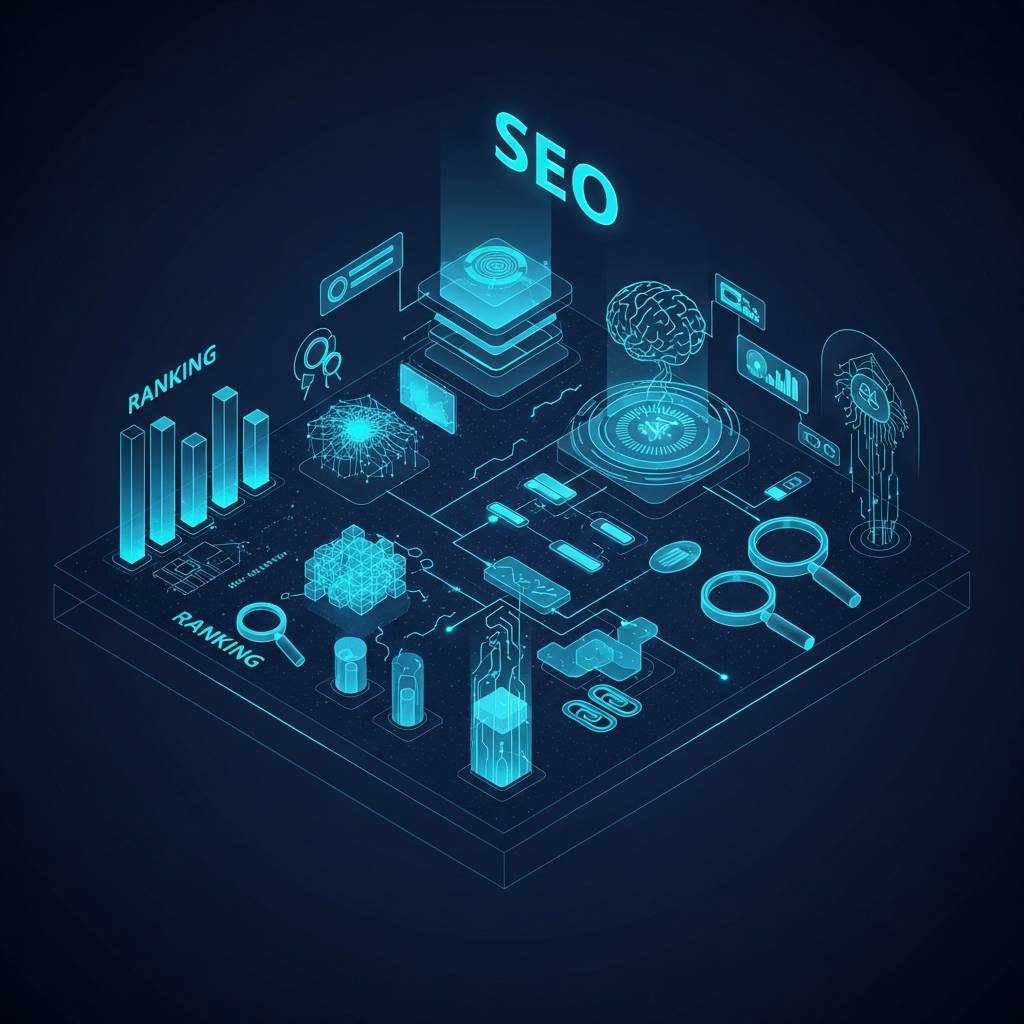
The digital marketing landscape is witnessing its most significant evolution in decades. As artificial intelligence fundamentally reshapes how users discover information, relying solely on traditional Search Engine Optimization is no longer sufficient to maintain a competitive edge. The rise of large language models has given birth to a critical new discipline: Generative AI Optimization, or GAO. For businesses and content creators today, the objective has expanded beyond simply ranking on the first page of search results; it is now about becoming the authoritative source cited within AI-generated answers.
In this rapidly changing environment, the key to sustainable growth lies in mastering a dual approach that satisfies both algorithmic crawlers and conversational AI agents. How can you ensure your brand remains visible across traditional search engines and the next generation of intelligent chatbots? This article presents a comprehensive blueprint designed to bridge the gap between established SEO practices and the emerging requirements of GAO. By integrating these strategies, you will learn how to future-proof your traffic, transition from keyword-centric tactics to answer-based optimization, and secure a dominant position in the AI era. Let us explore the essential roadmap for unlocking maximum visibility in this new digital frontier.
1. The Ultimate Blueprint for SEO and GAO: How to Dominate Search in the AI Era
The digital landscape is undergoing a seismic shift that renders traditional marketing playbooks obsolete. For decades, Search Engine Optimization (SEO) was the undisputed king of online visibility, focusing primarily on keywords and backlinks to climb the ladder of search results. However, the rapid integration of artificial intelligence into search algorithms has birthed a new, critical discipline: Generative Engine Optimization, or GAO. To dominate the modern search landscape, businesses must evolve beyond merely ranking for clicks; they must aim to become the primary source of truth for AI-generated answers.
The fundamental difference lies in user behavior. Traditional SEO targets the “ten blue links” on a Search Engine Results Page (SERP). In contrast, GAO optimizes content to be synthesized and cited by generative AI platforms like Google’s Gemini, Microsoft Copilot, and Perplexity. Users are increasingly bypassing the hunt for links in favor of direct, conversational answers. Consequently, the new blueprint requires a hybrid strategy that satisfies both the crawler and the chatbot.
To succeed in this dual environment, content creators must prioritize “Answer Engine” readiness. This involves structuring content to answer specific user queries directly and concisely within the first few paragraphs. This “inverted pyramid” style increases the likelihood of being featured in AI snapshots and zero-click summaries. Furthermore, semantic richness is paramount. Instead of keyword stuffing, focus on topical authority and context, ensuring that AI models understand the relationships between entities within your content.
Moreover, the importance of E-E-A-T (Experience, Expertise, Authoritativeness, and Trustworthiness) has never been higher. AI models are programmed to favor high-authority sources to minimize the risk of “hallucinations” or misinformation. Established brands like HubSpot and Investopedia continue to dominate not just because of their backlink profiles, but because their deep, data-backed content serves as training data for these models. Therefore, publishing original research, expert interviews, and verifiable data is the most effective way to signal value to both traditional algorithms and generative engines. By merging the technical foundation of SEO with the authority-driven requirements of GAO, you secure your visibility in the future of search.
2. Future-Proof Your Traffic: A Comprehensive Strategy for Mastering SEO and GAO
The digital landscape is undergoing a seismic shift. As search engines evolve into answer engines powered by artificial intelligence, relying solely on traditional keywords is no longer sufficient. To secure visibility in this new era, businesses must pivot toward a dual strategy that integrates classic Search Engine Optimization (SEO) with the emerging discipline of Generative AI Optimization (GAO). Future-proofing your traffic requires understanding how Large Language Models (LLMs) and search algorithms consume and present information.
From Keywords to Conversations**
Traditional SEO focuses on matching keywords to rank a link. In contrast, GAO focuses on optimizing content to be cited as the source of truth in AI-generated answers. Platforms like Google (with its AI Overviews) and Bing prioritize content that directly answers user intent in natural language. To master this, you must shift your content strategy from broad keywords to conversational, question-based queries. Instead of targeting “marketing software,” optimize for complex queries like “what is the best marketing software for small startups?” structuring your content to provide a concise, direct answer immediately.
Authority as the Ultimate Ranking Factor**
Generative AI models are designed to prioritize credibility to reduce the risk of “hallucinations” or false information. This makes Google’s E-E-A-T (Experience, Expertise, Authoritativeness, and Trustworthiness) guidelines more critical than ever. Brands like HubSpot and Salesforce consistently appear in AI-generated responses because they have established themselves as authoritative entities. To replicate this, your content must be factually rigorous, cited by other reputable domains, and authored by verifiable experts. Publishing original research, case studies, and data-driven insights significantly increases the likelihood of your content being referenced by AI tools like ChatGPT or Perplexity.
Structured Data: The Bridge Between Content and AI**
While AI reads text, it understands structure. Implementing robust schema markup (structured data) is essential for both SEO and GAO. By clearly tagging elements of your page—such as FAQs, product ratings, and author profiles—you provide context that helps algorithms understand the relationships between entities on your site. This technical clarity makes it easier for AI to extract specific details from your page and synthesize them into a generated answer, increasing your visibility in “zero-click” searches.
Optimizing for the Long Tail and Niche Context**
AI excels at synthesizing answers for specific, long-tail queries. Generic content is easily summarized and often ignored. High-value traffic in the future will come from deep, niche content that addresses specific problems that AI cannot easily guess. Focus on creating comprehensive guides that cover a topic from every angle, using clear headings and bullet points that allow both search crawlers and AI models to parse information efficiently.
By blending the technical precision of SEO with the authority and depth required for GAO, you create a resilient strategy that captures traffic from both traditional search results and the next generation of AI-driven interfaces.
3. Beyond Traditional Search: Unlocking the Power of SEO and GAO for Maximum Visibility
The digital landscape is undergoing a seismic shift. The era of solely chasing keyword rankings on traditional search engine results pages (SERPs) is evolving into a more complex ecosystem. In today’s market, visibility is no longer just about being listed; it is about being the “answer.” As user behaviors change, the integration of traditional Search Engine Optimization (SEO) with the emerging discipline of Generative AI Optimization (GAO)—sometimes referred to as Generative Engine Optimization (GEO)—has become the critical strategy for digital dominance.
Users are no longer limited to typing fragmented keywords into Google. Instead, they are engaging in complex dialogues with Large Language Models (LLMs) and AI-powered engines like OpenAI’s ChatGPT, Google’s Gemini, Anthropic’s Claude, and Perplexity AI. They ask detailed questions and expect synthesized, direct answers. To capture this traffic and maintain relevance, businesses must pivot their strategies to satisfy both algorithmic crawlers and AI inference models.
Establishing Authority in the Age of AI**
For Generative AI models to cite your brand as a primary source, credibility is paramount. LLMs tend to prioritize information derived from authoritative, high-trust domains. This amplifies the importance of adhering to principles like Google’s E-E-A-T (Experience, Expertise, Authoritativeness, and Trustworthiness). Building a robust digital footprint through mentions in reputable industry publications, providing verifiable data citations, and showcasing expert authorship signals to AI models that your content is factually accurate and worthy of being synthesized into an answer.
Optimizing for Natural Language and Conversational Intent**
GAO necessitates a move from rigid keyword targeting to conversational context. Because users interact with AI tools using natural language, content must be structured to answer specific questions concisely and clearly. Implementing comprehensive FAQ sections, direct “How-to” instructions, and clear definitions helps align your content with the conversational queries users are performing. Furthermore, utilizing advanced structured data (Schema markup) is essential; it allows machines to parse and understand the context and relationships within your content effectively, significantly increasing the likelihood of being featured in AI-generated summaries and snapshots.
Navigating the Multi-Platform Ecosystem**
Achieving maximum visibility now requires a presence across a fragmented discovery landscape. While traditional search engines remain vital, platforms like Bing, integrated with Copilot, and answer engines like Perplexity are carving out significant market share. These platforms often cite their sources directly within the generated text. Ensuring your content is fresh, original, and logically structured increases the chances of your brand appearing as a citation in these AI-generated responses, driving high-intent traffic to your site.
By unlocking the combined power of SEO and GAO, brands can future-proof their digital presence. It is not about choosing one method over the other; it is about executing a holistic strategy where technical excellence meets authoritative storytelling, ensuring your message reaches audiences whether they are searching via a toolbar or prompting an intelligent assistant.
4. SEO vs. GAO: The Complete Guide to Optimizing for Search Engines and Generative AI
The digital marketing landscape is undergoing a tectonic shift. For decades, the primary goal was ranking on the first page of Google. Now, with the advent of Large Language Models (LLMs) like OpenAI’s ChatGPT, Google Gemini, and Anthropic’s Claude, a new discipline has emerged: Generative AI Optimization (GAO), sometimes referred to as Generative Engine Optimization (GEO). Understanding the nuance between traditional SEO and this new frontier is critical for maintaining visibility in an era where users increasingly seek direct answers rather than a list of blue links.
The Fundamental Difference: Retrieval vs. Synthesis
To master both, one must understand their distinct operational mechanics. SEO (Search Engine Optimization) is primarily a retrieval game. Algorithms crawl the web to index pages, and when a user types a query, the engine retrieves the most relevant links based on keywords, backlinks, and site speed. The user then performs the synthesis by reading multiple pages.
GAO (Generative AI Optimization)**, conversely, is a synthesis game. When a user asks a question to a platform like Perplexity or Microsoft Copilot, the AI reads multiple sources instantly and synthesizes a single, coherent answer. Your goal is no longer just to be “found” but to be cited as the definitive source of truth within that generated response.
Keywords vs. Contextual Authority
In traditional SEO, keyword density and placement in headers (H1, H2) are paramount. While keywords still matter for GAO, the focus shifts heavily toward semantic relevance and entity authority. Generative AI models are trained to understand the relationship between concepts. They favor content that demonstrates deep topical authority rather than simple keyword matching.
For instance, if you are writing about “cloud computing,” an SEO approach might target long-tail keywords like “best cloud storage providers.” A GAO approach, however, requires your content to structurally answer specific questions (“What are the latency differences between AWS and Azure?”) in a format that LLMs can easily parse and summarize. This means using clear, concise language and structuring content in a logical, question-and-answer format.
The New Ranking Factors for the AI Era
To optimize for GAO while maintaining SEO health, focus on the following strategies:
* Optimizing for “Zero-Click” Searches: Generative AI aims to satisfy user intent without them leaving the interface. To be the source the AI chooses to present, structure your content with direct answers at the beginning of sections (the “BLUF” method: Bottom Line Up Front).
* Brand Entity Establishment: LLMs rely on established facts. Your brand needs to be a recognizable “entity” in the Knowledge Graph. This is achieved through consistent citations across authoritative sites, accurate Wikipedia entries (if applicable), and robust “About Us” pages that clearly define who you are and what you do.
* E-E-A-T is Non-Negotiable: Google’s emphasis on Experience, Expertise, Authoritativeness, and Trustworthiness applies directly to AI. Generative models are tuned to prioritize high-confidence information to reduce hallucinations. By citing reputable studies, using author bios with real credentials, and maintaining factual accuracy, you increase the likelihood of being picked up by both Google’s search algorithms and its AI Overviews.
* Structured Data and Schema: While humans read text, machines read code. Implementing Schema markup helps AI understand the context of your data—whether it is a recipe, a product review, or a standard FAQ. This technical clarity makes it easier for an LLM to extract your data and serve it to the user.
Coexistence is Key
The rise of GAO does not signal the death of SEO; rather, it indicates an evolution. Search engines like Google and Bing are integrating generative AI directly into their search results. Therefore, the winning strategy is a hybrid one. Continue to build technically sound, fast-loading websites with high-quality backlinks for traditional search, but adapt your content strategy to be conversational, authoritative, and structured for the age of artificial intelligence. By becoming the most trusted answer, you secure visibility regardless of whether the user is searching or chatting.
5. From Keywords to AI Answers: The Essential Roadmap for SEO and GAO Integration
The digital marketing landscape is undergoing a seismic shift. While traditional SEO focuses on ranking hyperlinks on a search engine results page (SERP), Generative AI Optimization (GAO)—often synonymous with Generative Engine Optimization (GEO)—aims to secure visibility within the synthesized answers provided by platforms like Google’s AI Overviews, Bing Chat, and ChatGPT. To thrive in this dual ecosystem, businesses must adopt an integrated roadmap that bridges the gap between rigid keyword targeting and the conversational, intent-driven nature of AI.
Evolving from Keywords to Conversational Queries**
Historically, SEO relied heavily on short-tail keywords. However, generative AI thrives on context and nuance. The first step in integration is shifting focus toward long-tail, conversational queries. Users are no longer just searching for “best CRM software”; they are asking complex questions like, “What is the best CRM for a small real estate business with a limited budget?” Content strategies must pivot to directly answer these specific questions. Incorporating natural language patterns and “Question-Answer” formats within articles helps AI algorithms recognize the content as the most direct and relevant response to a user’s prompt.
Establishing Authority through Deep Expertise (E-E-A-T)**
AI models prioritize credibility to minimize the risk of hallucinations. This makes Google’s E-E-A-T (Experience, Expertise, Authoritativeness, and Trustworthiness) framework more critical than ever for both SEO and GAO. To be cited by an AI as a primary source, content must demonstrate deep subject matter expertise. This involves publishing comprehensive guides, citing primary research, and ensuring content is authored or reviewed by recognized experts. Platforms like Investopedia and Healthline succeed because they consistently provide the depth and accuracy that AI engines can confidently summarize and attribute.
Structuring Data for Machine Comprehension**
For an AI to cite content, it must first understand it. Technical SEO remains the backbone of this process. Implementing Schema markup (structured data) is non-negotiable. It helps search engines and AI bots categorize information effectively. Whether marking up FAQs, product data, or organization details, structured data provides the context AI needs to extract facts and figures accurately. Furthermore, using clear headings, bullet points, and logical formatting is no longer just for human readability; these are essential cues for Large Language Models (LLM) parsing text for relevant information.
Optimizing for the Zero-Click Reality**
The objective of GAO is often to provide value before the user even clicks a link. While this presents a challenge to traditional traffic metrics, being the featured source in an AI overview builds immense brand awareness and authority. To achieve this, adopt the “BLUF” (Bottom Line Up Front) approach. Place critical information, definitions, and direct answers at the very beginning of content sections. This increases the likelihood of text being extracted for snippets and AI summaries, positioning the brand as the immediate solution provider.
By merging the technical precision of traditional SEO with the context-rich requirements of GAO, publishers can dominate both the search bar and the chat interface, ensuring visibility regardless of how users choose to find information.

0件のコメント