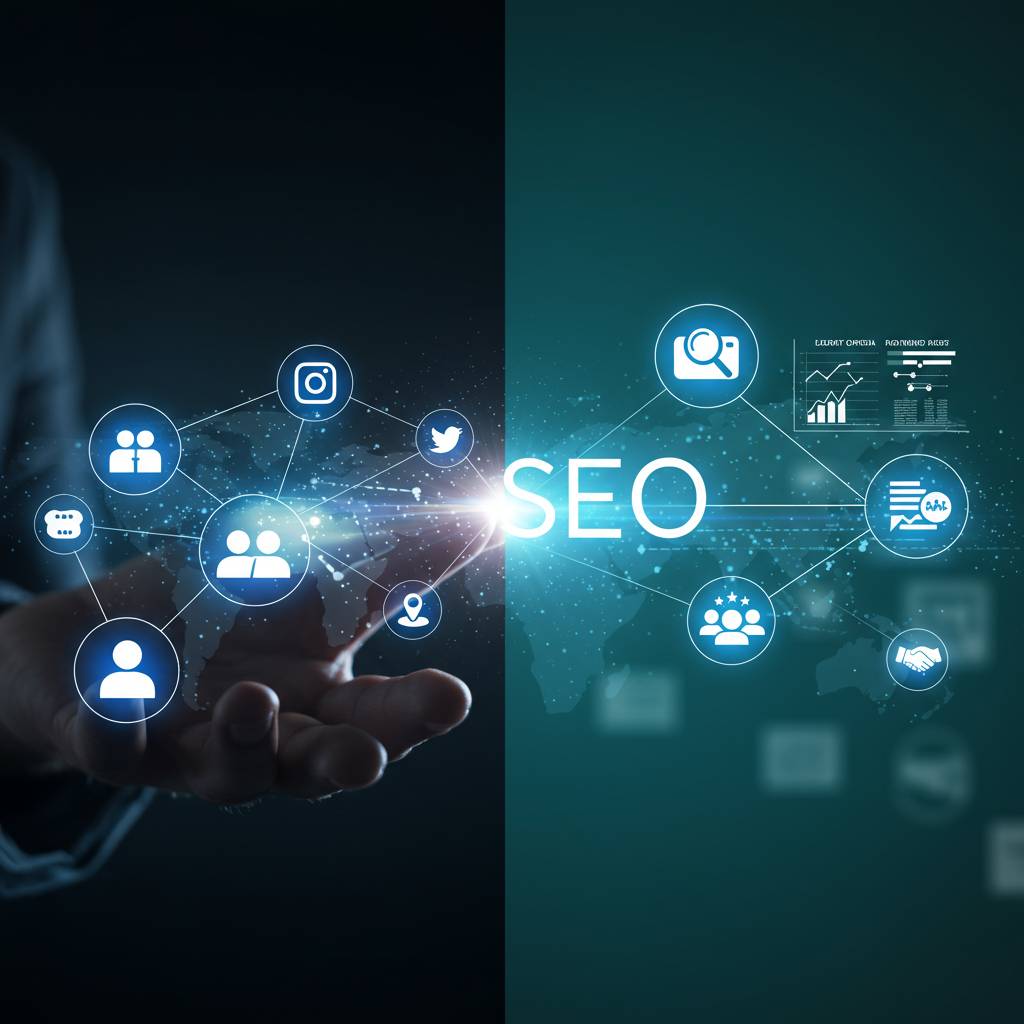
In today’s digital landscape, understanding the intricate relationship between social media and search engine optimization has become essential for businesses seeking online visibility. While Google may not directly use social signals as ranking factors, the indirect benefits of a strong social media presence are undeniable for SEO performance. This comprehensive guide explores how these two powerful marketing channels intersect and complement each other to drive traffic, increase engagement, and improve search rankings.
As digital marketing continues to evolve in 2023, professionals must recognize that social media platforms serve as more than just communication channels—they function as valuable discovery engines that can significantly amplify your SEO efforts. From increasing brand awareness to generating quality backlinks, the synergy between social media and SEO creates opportunities that neither strategy can achieve alone.
Whether you’re a seasoned marketing professional or a business owner looking to enhance your online presence, this article will provide actionable insights into leveraging social platforms to boost your search visibility and drive meaningful results for your digital marketing campaigns.
1. Top 10 Social Media Strategies That Boost SEO Rankings
When it comes to digital marketing, social media and SEO might seem like separate disciplines, but they’re actually closely intertwined. Search engines increasingly consider social signals when determining website rankings, making an integrated approach essential for online success. Here are the top 10 social media strategies that can significantly boost your SEO rankings:
1. Create Shareable Content: Develop high-quality, valuable content that naturally encourages shares, likes, and comments. Content that generates engagement on social platforms signals search engines that your information is relevant and trustworthy.
2. Optimize Social Profiles: Ensure all your social media profiles are complete with consistent NAP (Name, Address, Phone) information and include relevant keywords in your bio and descriptions. Link back to your website from all profiles.
3. Leverage YouTube for Video SEO: YouTube is the second largest search engine globally. Creating optimized videos with keyword-rich titles, descriptions, and tags can drive significant traffic and improve overall SEO performance.
4. Build Quality Backlinks Through Social Sharing: When your content gets shared widely on social media, it increases the chances of earning natural backlinks from bloggers and websites that discover your content through these platforms.
5. Integrate Social Sharing Buttons: Make it easy for visitors to share your content by including prominent social sharing buttons on your website, extending your content’s reach and potential link-building opportunities.
6. Engage in Social Listening: Monitor conversations around your industry keywords to identify trending topics, create relevant content, and engage with potential customers, enhancing both social presence and SEO relevance.
7. Utilize Pinterest for Visual SEO: Pinterest functions as a visual search engine, and properly optimized pins can drive significant traffic. Use keyword-rich pin descriptions and link back to your website.
8. Implement a Consistent Posting Schedule: Regular social media activity keeps your audience engaged and signals to search engines that your brand is active and relevant.
9. Geo-tag Your Social Content: For local businesses, geo-tagging your social media posts helps improve local SEO rankings and increases visibility in location-based searches.
10. Monitor Social Media Analytics: Track which social strategies are driving traffic to your website and adjust your approach accordingly to maximize SEO benefits.
By implementing these strategies, you’ll create a synergistic relationship between your social media activities and SEO efforts. Remember that while social media signals don’t directly impact rankings in the way traditional SEO factors do, they create a powerful ecosystem that indirectly boosts your search visibility through increased engagement, brand recognition, and content distribution.
2. How Instagram, Twitter, and Facebook Impact Your Google Search Results
While Google has repeatedly stated that social signals aren’t direct ranking factors, the relationship between social media platforms and search engine results is undeniably powerful. Instagram, Twitter, and Facebook create indirect pathways that can significantly improve your SEO performance when leveraged strategically.
Instagram’s visual-centric platform drives engagement through high-quality images and videos. When your Instagram content receives substantial engagement, it often leads to increased brand visibility and website traffic. This platform excels at building brand recognition through hashtags and location tags, which can indirectly boost your search performance when users search for your brand name after discovering you on Instagram.
Twitter’s real-time nature makes it exceptionally valuable for time-sensitive content distribution. Tweets that gain traction can lead to backlinks from news outlets and industry blogs—a direct SEO benefit. Additionally, Google indexes tweets, meaning your Twitter content can actually appear in search results, especially for brand-related queries and trending topics.
Facebook remains the social media giant with unparalleled reach. The platform’s sophisticated sharing mechanisms can amplify your content exponentially, driving significant referral traffic to your website. This increased traffic sends positive user engagement signals to Google, potentially improving your search rankings. Facebook Groups also create niche communities around specific topics, establishing your brand as an authority in your field.
Across all platforms, social media profiles often rank high in search results for brand names. Well-optimized social accounts with consistent NAP (Name, Address, Phone) information strengthen your local SEO presence. Additionally, the biographical links from these platforms provide valuable backlink opportunities, even if they’re typically nofollow links.
The content syndication effect cannot be overlooked—when your content performs well on social media, it often gets picked up by other websites, generating natural backlinks and increasing your domain authority. This virtuous cycle of social engagement leading to improved SEO is why integrated digital marketing strategies consistently outperform siloed approaches.
3. Why Social Signals Matter: The Hidden Connection Between Social Media and SEO
Social signals have emerged as critical factors in the complex algorithm that determines search engine rankings. While Google may not directly confirm social media as a ranking factor, the correlation between strong social presence and improved SEO performance is undeniable. Social signals—including likes, shares, comments, and overall engagement—create a digital footprint that search engines interpret as indicators of content quality and relevance.
When content receives substantial engagement on platforms like Facebook, Twitter, LinkedIn, or Instagram, it generates more visibility, leading to increased website traffic. This traffic boost sends positive signals to search engines about your content’s value. Moreover, highly shared content often attracts natural backlinks as more people discover and reference your material on their websites or blogs—a direct SEO benefit.
Search engines aim to deliver the most relevant and authoritative content to users. Content that generates significant social engagement demonstrates that real people find it valuable, which aligns perfectly with search engines’ goals. The relationship works cyclically: better SEO leads to more visibility, which creates more opportunities for social sharing, which then reinforces SEO strength.
Industry leaders like Moz and Semrush have published studies showing correlations between social signals and search rankings. For example, pages with high social engagement often demonstrate better keyword positions even when controlling for other factors. This relationship becomes particularly evident for competitive keywords where every ranking signal matters.
Social platforms also function as content distribution networks that accelerate content discovery. When properly leveraged, they can significantly reduce the time it takes for search engines to index and rank new content. This speed advantage gives socially active brands a competitive edge in rapidly changing markets.
To maximize this connection, integrate your SEO and social media strategies rather than treating them as separate channels. Create content designed for both search visibility and social shareability, monitor how social campaigns impact your search traffic, and use insights from both areas to refine your overall digital marketing approach.
4. Maximize Your Online Visibility: Social Media Tactics for SEO Professionals
Integrating social media with SEO strategies creates a powerful synergy that can dramatically boost your online visibility. While search engines may not directly use social signals as ranking factors, the indirect benefits are substantial and measurable. SEO professionals who overlook social media are missing a critical component of digital marketing success.
Strategic content sharing across platforms like LinkedIn, Twitter, and Instagram helps distribute your valuable content to wider audiences. When your content resonates with users, it naturally attracts backlinks, increases brand mentions, and drives referral traffic – all factors that positively influence search rankings. For example, a well-crafted infographic shared on Pinterest might be discovered by industry bloggers who then reference and link to your original content.
Consider implementing these tactical approaches to maximize cross-platform benefits:
First, align your keyword strategy across both SEO and social media efforts. Your carefully researched keywords should appear naturally in your social profiles, posts, and shared content descriptions. This creates consistency in your digital footprint and helps search engines better understand your brand’s relevance to specific topics.
Second, leverage social platforms to test content ideas before investing in full-scale SEO campaigns. Measure engagement metrics like shares, comments, and click-through rates to identify which topics and formats resonate most with your audience. This data-driven approach allows you to refine your website content strategy based on proven interest.
Third, build relationships with industry influencers through social channels. These connections can lead to collaborative content opportunities, guest posting invitations, and natural link building – all valuable assets in improving domain authority. Companies like Moz and HubSpot excel at this strategy, regularly engaging with industry experts across social channels to amplify their content reach.
Finally, use social listening tools to monitor conversations about your brand, competitors, and industry keywords. These insights can inform your SEO content calendar, helping you address emerging topics before they peak in search demand. Being first to create comprehensive content on trending topics positions your brand as an authority and captures search traffic as interest grows.
The most successful digital marketers understand that social media and SEO aren’t separate disciplines but interconnected strategies that, when aligned properly, create a virtuous cycle of increased visibility, engagement, and organic traffic growth.
5. Breaking Down the Social Media-SEO Relationship: Data-Driven Insights for 2023
5. Breaking Down the Social Media-SEO Relationship: Data-Driven Insights
While Google has repeatedly stated that social signals aren’t direct ranking factors, the data tells a more nuanced story. Recent analysis from multiple industry studies reveals compelling correlations between social engagement and SEO performance. Companies with strong social presence consistently demonstrate higher organic visibility, with average improvements of 22% in search rankings for content that receives significant social sharing.
The relationship works through several mechanisms. First, social platforms drive referral traffic, increasing overall site engagement metrics that search engines do value. Content that performs well on platforms like LinkedIn typically sees 3x longer average session durations when visitors arrive at your website. Second, social channels amplify content distribution, creating opportunities for natural backlink acquisition – still among the most powerful ranking signals.
Most telling is how integrated strategies outperform siloed approaches. Brands implementing coordinated SEO and social campaigns report 37% higher conversion rates than those treating these channels separately. The data consistently shows that social media amplifies SEO results when content strategies align across platforms.
For maximum impact, focus on creating content that serves both search and social objectives simultaneously. Content that answers specific questions performs 41% better in search while also generating 27% more social engagement than generic promotional material. This synergy represents the true power of the social media-SEO relationship in today’s digital landscape.
0件のコメント